Galicia
A city in Spain, known for natural beauty and safety.
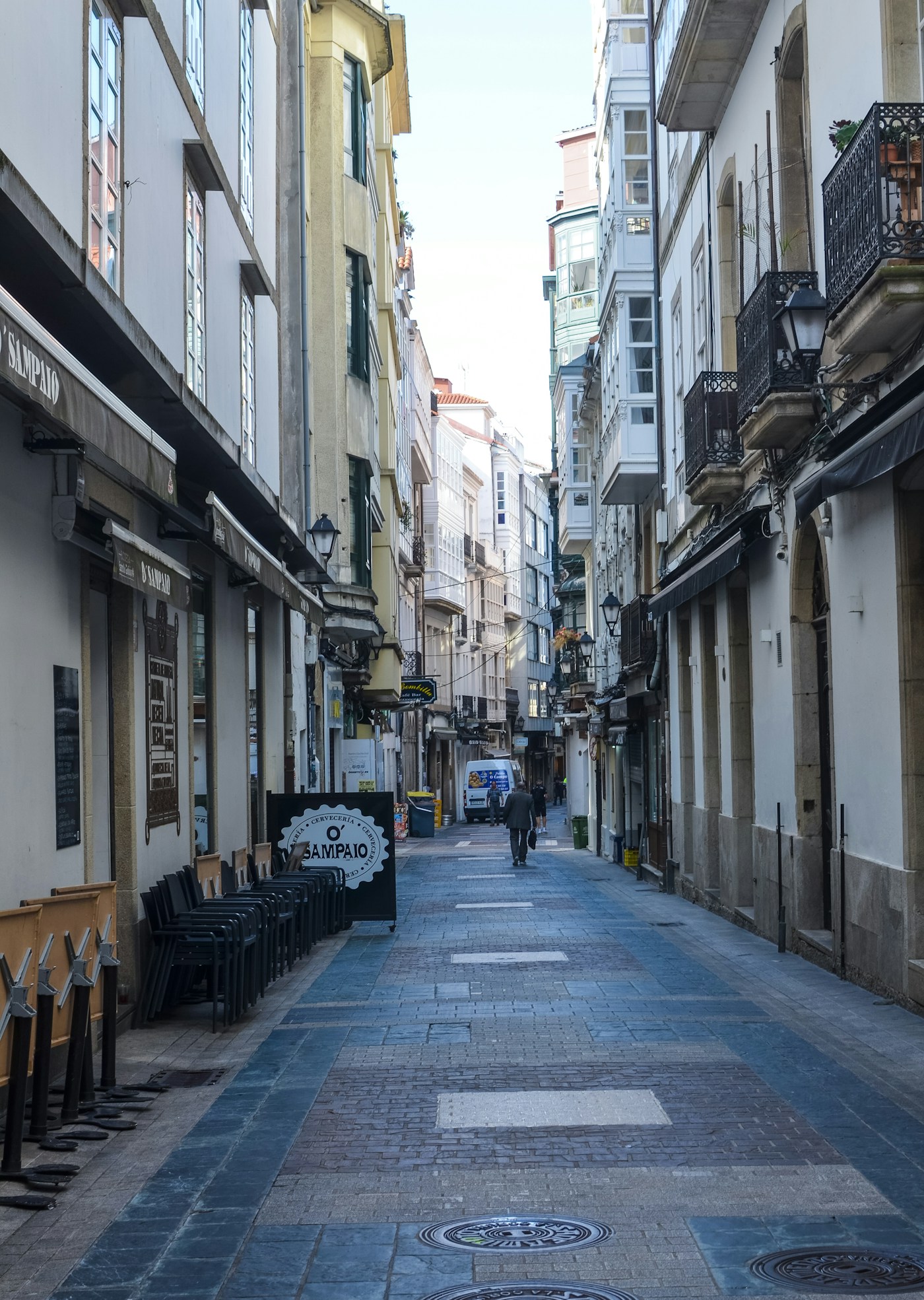
Photo by Aleksei Zhivilov on Unsplash
A Coruña gets 178 sunny days a year — mild conditions year-round. Monthly cost of living for a solo adult is around $1,854, more affordable than most cities in Europe. A Coruña scores highest in nature access, safety, and healthcare. On the other hand, learning the local language is important for daily life.
A Coruña, Spain runs about $1,854/mo for a balanced lifestyle, logs 178 sunny days a year, and scores 78% on our safety composite across 271K residents.
Find your city match in 5 minutes
Take the quizFeels-like °C
Dinner outside
Cost of Living
monthly · balanced lifestyle · solo living
Feels-like °C
Dinner outside
Cost of Living
monthly · balanced lifestyle · solo living
Mobility
Culture
Nature & Outdoors
Air Quality
Safety
Career
Social & Community
Food & Dining
Family
Healthcare
A Coruña's compact historic center and waterfront location enable residents to access groceries, pharmacies, cafés, and services within a 10-15 minute walk from most residential neighborhoods.
The city has well-maintained sidewalks, pedestrian-prioritized streets in the old town, and mixed-use zoning with shops integrated into residential areas.
While outer districts are somewhat less walkable, the majority of expat residents can comfortably handle daily errands on foot without a car.
Expats in central and midtown neighborhoods can rely on trams, buses, and a trolleybus for most daily commutes and errands with 10-15 minute frequencies during the day and integrated ticketing via a contactless card.
Outer residential areas have decent bus coverage but longer waits up to 30 minutes, making car-optional living feasible in well-served zones while requiring occasional rideshares elsewhere.
English apps and real-time tracking ease newcomer adaptation, supporting a transit-reliant lifestyle without major disruptions.
Daily car trips like commuting to work or school drop-offs typically take 10-20 minutes door-to-door across the compact city, allowing expats to reclaim substantial time for family or leisure without excessive stress from congestion.
Parking is generally straightforward with ample street and lot options near residential areas, minimizing search time and enabling predictable routines for errands and healthcare visits.
Long-term residents benefit from reliable flow on main routes, reducing daily frustration and supporting an efficient car-dependent lifestyle.
Coastal Galician city with mild winters and limited snow makes two‑wheelers usable year‑round though frequent rain reduces reliability.
Motorbikes and scooters are part of Spanish urban mobility but are less dominant here than in southern/SE cities; short‑term rentals and monthly hires exist for foreigners but are not as cheap or ubiquitous as in major scooter cultures.
Road geometry is generally suitable for scooters and licensing for visitors is straightforward for short stays, so a scooter is a viable secondary daily option.
Cycling in A Coruña involves navigating patchy painted lanes that often vanish at busy intersections, making daily commutes risky and limited to confident riders in central areas.
For a long-term expat, this means car dependency for most errands and outer neighborhood trips, with bike parking scarce outside key spots, hindering practical integration into everyday life.
While possible for short recreational rides, the inconsistent network elevates stress and limits lifestyle freedom compared to more connected cities.
A Coruña Airport (Alvedro) is approximately 10 km south of the city center, accessible by car in 15-18 minutes under typical weekday traffic conditions.
The drive is straightforward via well-maintained regional roads without significant congestion issues, making it a convenient option for residents who travel regularly.
Long-term residents face significant challenges visiting family or business contacts overseas, as the local airport offers only a handful of direct international flights, mostly seasonal to nearby European spots like London or Paris with limited weekly frequencies.
Most intercontinental or even broader European travel requires connections through Madrid or Lisbon, adding time and cost to trips.
This limited access can make maintaining global ties feel isolating for expats who travel frequently.
From A Coruña, expats can access several stable regional budget routes via carriers like Vueling and Volotea to destinations such as Madrid, Barcelona, and nearby islands, enabling occasional affordable weekend getaways within Spain.
However, international options remain limited with low frequency, restricting spontaneous long-distance travel and keeping overall mobility costs higher for frequent explorers.
This setup supports basic regional exploration but demands planning ahead for better deals, impacting long-term travel flexibility.
A Coruña has modest art institutions including the Museum of Contemporary Art (MARCO) with rotating exhibitions and the Fine Arts Museum, but lacks the scale or international reputation of major art centers.
For art-focused relocators, the city offers local and regional collections without the breadth of traveling exhibitions or world-class permanent holdings found in larger Spanish cities.
Expats in A Coruña have access to a few small local history exhibits that offer basic insights into the city's maritime and Galician past, providing occasional cultural engagement without dominating daily life.
This limited offering means history enthusiasts may need to travel elsewhere for deeper exploration, but it supports a relaxed lifestyle with modest opportunities for intellectual stimulation.
Long-term residents benefit from low-pressure cultural touchpoints that integrate easily into routine walks or weekends.
The city contains one internationally recognised World Heritage landmark (the ancient Roman lighthouse) plus a compact historic old town with several civic and maritime buildings.
The overall heritage footprint is notable locally but limited in number of internationally prominent sites.
For expats in A Coruña, access to theatre means occasional visits to local venues for Spanish-language productions, offering modest cultural outings but limited English options or variety.
This supports a basic cultural life without frequent high-quality shows, suiting those who prioritize affordability over vibrant arts immersion.
Long-term, it means supplementing with travel to larger Spanish cities for diverse performances.
Expats in A Coruña enjoy reliable access to several modern cinemas offering mainstream films and some original-language screenings with subtitles, supporting a consistent movie-going routine without major disruptions.
This setup allows for weekly entertainment options that integrate well into long-term social life, though limited independent venues mean fewer niche cultural experiences.
Overall, it provides solid quality-of-life enhancement for film enthusiasts seeking convenience over specialization.
A relocating music lover in A Coruña can enjoy occasional live shows at a handful of local bars and mid-sized halls featuring rock, pop, and some indie acts, but with limited genre diversity and inconsistent weekly programming.
This setup allows attendance 1-2 times per month without much hassle, yet lacks the vibrancy for frequent outings across varied tastes.
Long-term, it provides basic access but may leave enthusiasts seeking more depth in the scene.
A Coruña hosts occasional live music events primarily during summer months and cultural festivals, with modest venue infrastructure and limited year-round programming.
The city lacks the consistent weekly schedule and diverse genre offerings that characterize more established music hubs, making it suitable for those seeking a quieter cultural environment but limiting options for frequent live music engagement.
A Coruña offers a decent concentration of bars, pubs, and clubs in the old town and marina areas, active from Thursday through Saturday with some spots open past 2am, allowing regular weekend outings for socializing.
Expats can enjoy a mix of local tapas bars and dance clubs without hassle, though weekday options taper off early, limiting it to occasional rather than daily integration into social life.
Safety at night feels reliable in main zones, supporting comfortable long-term participation in the scene.
A Coruña is a true coastal city on a rocky Atlantic peninsula with promenades, headlands and beaches directly adjacent to the central district; you can reach sea-facing waterfronts and viewpoints within a 5–10 minute walk from the historic centre.
The open Atlantic is visibly present across the city skyline and maritime life is a routine part of daily life.
A Coruña is coastal and surrounded mainly by low coastal terrain; genuine mountains with alpine character (peaks in the 600–1,000+m range such as parts of Galicia's interior) are generally about 1.5–2 hours' travel from the city.
Mountain outings are feasible for weekends but not convenient for daily or very frequent trips, and the nearby landscape is more coastal/cliff than high alpine.
The city contains smaller coastal woodlands and urban parks and larger, continuous Atlantic forest areas are reachable by car in roughly 20–40 minutes (regional Atlantic woodlands and plantations).
Large, dense protected forests are not inside the urban core, so access is best described as smaller forests within/near the city and several larger forests a short drive away.
A Coruña has multiple large destination green areas (Monte de San Pedro, Parque de Santa Margarita) plus extensive waterfront promenades and numerous neighborhood parks and tree‑lined streets; most residential areas are within a 10–15 minute walk of a park or green promenade.
Some denser central blocks have smaller pocket parks rather than large lawns, but overall distribution and maintenance make the city feel reasonably green.
The city is situated on a rocky Atlantic peninsula with ria/estuary coastline and multiple urban beaches, giving good coastal water access but very limited freshwater lakes within the urban area.
There are small rivers and estuarine inlets nearby, but no large inland lakes immediately accessible for routine recreation, so freshwater options are limited.
A Coruña has a long, continuous seafront promenade wrapping the city (well over 10 km of paved coastal path) that links beaches, parks and the historic peninsula, providing safe, scenic, year-round routes.
Multiple surfaces (boardwalk, paved promenade, adjacent park paths) and sheltered sections make it suitable for long uninterrupted runs.
A Coruña offers coastal cliff walks and small local hills close to the city, but meaningful mountain hiking typically requires drives of more than an hour to reach the higher Galician ranges.
The nearby terrain is scenic but modest in elevation and route variety, so a regular hiker would need to travel farther for sustained, varied day- or multi-day alpine-style routes.
A Coruña sits on the Atlantic coast with multiple established campgrounds and beach camping options within 10–30 km and access to forested natural areas such as the Fragas do Eume region roughly 35–45 km inland.
The combination of coastal sites and nearby protected forest areas provides many high-quality camping choices for long-term outdoor use, though wild camping is limited by regional rules.
Riazor and Orzán beaches sit adjacent to the city centre (within a 5–15 minute walk) with promenades, sand and facilities, and residents use them regularly in summer.
Atlantic water off Galicia is cool and typically below 18°C outside peak summer months, so swimming is seasonal and the cold-water limitation keeps the score at the seasonal/regular band.
A Coruña is a true Atlantic coastal city with city beaches (Riazor/Orzán) and a strong local surf culture; well-known exposed breaks in Galicia (for example the Pantín area) are reachable by car in roughly 30–60 minutes depending on exact destination.
Atlantic swell provides good surf in autumn–winter, there are multiple surf schools, board rentals and competitions locally, so a watersports enthusiast would be satisfied living here though the very best reef/point breaks are slightly outside the city.
A Coruña sits directly on the Atlantic coast with rocky reefs, kelp habitats and known local wreck sites within a few kilometres of shore, and there are local dive operators offering day trips.
Water is cold and visibility variable, so while scuba/snorkel sites are accessible, they are not high‑quality tropical reefs.
There is no nearby Alpine skiing; the nearest outdoor alpine-style resort in Galicia (Manzaneda) is roughly 180–220 km away (about 2.5–3 hours drive) and is a small, limited ski area with modest vertical and lift count.
Larger, higher-quality resorts in the Cantabrian range or the Pyrenees are several hours farther, so regular alpine skiing is distant and limited in quality.
Galicia has natural granite sea‑cliffs and bouldering along the coast, but the nearest widely used crag clusters require roughly 60–90 minutes driving from A Coruña (on the order of 60–90 km).
There is no large, diverse climbing region immediately adjacent to the city, but accessible coastal and inland crags make day trips feasible within that 60–90 minute window.
Expats in A Coruña enjoy comfortable walking day and night across most neighborhoods, with violent street crime rare and limited to isolated incidents.
Women report feeling secure alone even late at night in central and residential areas, allowing unrestricted exploration without safety dominating daily routines.
Petty theft requires standard vigilance in busier spots, but this does not alter long-term lifestyle choices.
A Coruña shows moderate property crime typical of mid-sized Spanish coastal cities.
Pickpocketing and opportunistic theft occur in tourist areas and transit hubs, but residential neighborhoods remain generally secure with low rates of home burglary.
Standard urban precautions—locking doors, avoiding displays of valuables—are sufficient for daily safety without requiring security infrastructure.
Residents can confidently walk, cycle, and use taxis daily with low risk of serious injury due to fatality rates around 3 per 100K and well-maintained sidewalks with protected crossings in most neighborhoods.
Driving feels predictable with strong rule enforcement, allowing newcomers to adapt quickly without constant vigilance.
Long-term, this supports an active lifestyle using diverse transport modes safely across the compact city.
A Coruña sits on the stable Iberian shelf well away from major plate boundaries, and the Galicia region has historically experienced only infrequent, low‑magnitude earthquakes; M4+ events are rare.
Spain's higher seismicity is concentrated in the south and the Pyrenees, so seismic shaking is a minor relocation concern here and modern Spanish building codes reduce infrastructure vulnerability.
A Coruña sits on the Atlantic coast with a consistently humid, maritime climate and dense urban development, so large wildfires and heavy smoke in the city are rare.
The wider Galicia region does experience seasonal rural wildfires inland, but these events seldom cause repeated evacuations or major disruption inside the city itself.
A Coruña is a low-lying Atlantic port with a seafront and harbour at sea level; strong Atlantic storms and high tides periodically cause coastal inundation and road closures along the promenade and quay areas.
Major, city-wide flooding is uncommon thanks to existing coastal defences and drainage, so impacts are typically limited to seafront and harbour-adjacent streets.
For a relocating food lover, A Coruña offers modest access to common international cuisines like Italian and Chinese alongside abundant Galician seafood, but lacks depth in authentic global options such as Ethiopian or Peruvian.
This limits weekly culinary exploration to familiar flavors, potentially leading to routine dining experiences over time without much novelty for long-term expat life.
Neighborhood variety is concentrated in the city center, reducing convenience for diverse outings in outer areas.
A relocating food lover in A Coruña enjoys reliable Galician seafood and tapas across casual bars and mid-range spots in local neighborhoods, with fresh ingredients ensuring decent meals most nights without much searching.
The solid floor of quality means everyday dining feels satisfying, though standout excellence requires seeking out acclaimed venues.
Long-term, this supports a comfortable expat life centered on coastal flavors without frequent disappointments.
A Coruña has very limited brunch culture typical of smaller Spanish coastal cities.
Most dining centers on traditional lunch (comida) and dinner patterns, with few dedicated brunch venues offering the casual weekend breakfast-lunch hybrid common in Northern Europe or North America.
Expats expecting regular brunch options will find the dining culture oriented toward different meal timing.
A Coruña has modest availability of vegan and vegetarian options, primarily concentrated in the city center and tourist areas.
While Spain's Atlantic coast cities have growing plant-based awareness, dedicated vegan/vegetarian restaurants remain limited compared to larger Spanish cities, requiring some effort to find reliably meat-free dining outside of basic salad offerings at mainstream restaurants.
Expat newcomers in A Coruña benefit from solid delivery options covering most neighborhoods with a good mix of local Spanish eateries and international cuisines, enabling reliable meals on workdays or evenings in about 30-45 minutes.
Late-night availability supports occasional needs without hassle, though peak times may extend waits slightly.
This setup allows comfortable long-term living without frequent cooking or outings for food.
New expats in A Coruña can enroll in Spain's public healthcare after obtaining residency and registering with social security, allowing access to routine GP visits within a week but facing 2-8 week waits for specialists, which delays non-urgent care during the critical first year.
English support is limited outside major hospitals, often requiring translation help, though facilities are modern with low copays that ease long-term financial strain.
This setup supports primary care reliability for newcomers but prompts many to maintain private insurance for faster specialist access and better expat usability.
Expatriates in A Coruña can access reliable private clinics and a hospital covering most specialties with wait times of days rather than weeks, providing a solid alternative to public care for routine and intermediate needs.
English-speaking doctors are available at key facilities, and international insurance is generally processed smoothly, enabling dependable care without major disruptions to long-term living.
However, advanced technology for rare conditions may require travel to larger cities like Madrid, limiting full self-sufficiency for complex health issues.
A Coruña is a regional port and industrial centre with a few large employers (a major retail group’s headquarters sits in the province about 15 km away), but most private-sector hiring is local-language and concentrated in retail, logistics and services.
English-language, multinational professional openings are scarce; a qualified foreign professional should expect 4–6 months of active searching and would often need Spanish/Galician to be competitive.
A Coruña is a mid-sized regional port with an economy driven by shipping, fisheries, retail and public services rather than a broad corporate HQ base; its metro economy is modest and focused on local and regional activity.
There is some diversification into regional services and light industry and limited presence of large professional-services firms, placing it in the 'emerging but modest' band rather than a major business node.
The city's professional employment is concentrated around maritime/port activities and ship repair, plus public services (education/health) and tourism/retail — roughly 3–4 distinct sectors.
Maritime industries (port, fishing, naval services) remain a large employer relative to other private sectors, so career-switching without relocation is possible but limited.
A Coruña has a very small, local entrepreneurship scene made up of a handful of coworking spaces and municipal incubator initiatives but no sustained local VC market or angel network.
There are essentially no homegrown scale exits or unicorns and founders typically must rely on regional or national investors, so someone building a startup here would be a pioneer rather than joining a deep ecosystem.
A Coruña has a largely regional economy with only a handful of multinational employers that maintain substantive local workforces; the largest multinational activity (notably a major retail group) is concentrated in nearby Arteixo rather than inside the city proper.
Professionals seeking a broad set of multinational opportunities typically must look to larger Spanish business centres such as Madrid or nearby Vigo/Santiago.
The city has roughly 5–8 dedicated coworking spaces concentrated in the city centre and near the port; facilities generally offer reliable broadband and basic meeting rooms but few premium private-office options.
Variety of tiers and 24/7 access is limited, and community programming is modest, so a long-term remote worker is functional but slightly underserved.
A Coruña has a modest professional scene driven by the local university, port/maritime industries and a small local chamber; there are occasional sector trade fairs and monthly industry meetups but no dense weekly rhythm.
Most events are Spanish-language and English-accessible professional programming is limited, so an international professional can network but it requires significant effort.
A Coruña offers a limited higher education ecosystem anchored by the University of A Coruña, covering sciences, humanities, engineering, and health fields, with a student population that adds moderate vibrancy to central neighborhoods through cafes and events.
English-taught options are scarce, restricting access for expats to continuing education or lectures without Spanish proficiency, though some exchange programs provide occasional international exposure.
For long-term newcomers, this supports basic intellectual engagement but lacks the depth for immersive university culture or professional development.
In Spain all major remote-work and developer platforms (Slack, Zoom, Google Workspace/Meet, Microsoft Teams, GitHub, npm, Docker Hub and major cloud consoles) are reachable without VPN and there is no national blocking or routine throttling of these services.
Regulatory and market conditions maintain open access for international productivity tools, so a remote professional can operate without circumvention tools.
English is present in tourist-facing shops and some younger service workers, but Galician/Spanish are the default for municipal offices, pharmacies, local clinics and utility billing; municipal websites and forms are primarily in Spanish/Galician.
An English-only newcomer will routinely need translators or apps to complete bureaucracy, see a non-international doctor, or deal with a landlord in a neighborhood setting.
Expat families relocating to A Coruña face a complete lack of dedicated international schools offering English-medium instruction with globally recognized curricula, forcing reliance on local Spanish-language schools or homeschooling.
This absence severely limits educational continuity for children accustomed to international systems, creating major long-term challenges for family integration and future academic prospects.
Sending children to schools in nearby larger cities like Madrid would add significant daily commuting burdens, undermining quality of life.
In average neighborhoods of A Coruña, parents can typically find functional public playgrounds within 15 minutes' walk, offering swings, slides, and basic climbing structures that support daily play routines for young children.
Maintenance is generally adequate with some shade and benches, though variety and density vary, meaning some families may need to travel farther for more engaging options.
This setup allows for regular outdoor activity without a car but requires occasional planning for the best spots, fostering a balanced family lifestyle.
Relocating expats in A Coruña enjoy reliable access to multiple supermarket chains like Mercadona and Carrefour within a 10-minute walk in most neighborhoods, offering fresh produce, organic selections, and international aisles with Western staples.
Clean, modern stores operate long hours including evenings and weekends, making weekly shopping convenient without frustration.
This setup supports a comfortable long-term lifestyle with good variety at competitive prices.
For long-term expats in A Coruña, the 1-2 reliable mid-quality malls like Marineda City provide stable everyday shopping and dining options, supporting a convenient routine without major disruptions.
However, limited variety in stores and international brands means occasional trips to larger cities for specialized needs, impacting lifestyle flexibility.
This setup suits moderate retail expectations in a coastal city, balancing accessibility with the need for occasional external shopping.
A relocating coffee enthusiast in A Coruña would find a handful of independent specialty cafés offering single-origin pour-overs and skilled baristas in central neighborhoods, enabling daily quality coffee rituals without much hassle.
However, options thin out in outer areas, so choosing a home or work location near the old town or Ensanche ensures consistent access to work-friendly spots with reliable WiFi.
This emerging scene supports a satisfying long-term coffee lifestyle but requires some neighborhood planning for seamless integration.
A Coruña has a moderate gym ecosystem typical of mid-sized Spanish coastal cities.
Several chain gyms and independent fitness centers operate in the city center and main neighborhoods, offering basic to mid-range equipment for strength training and cardio.
Group fitness classes are available but limited compared to larger Spanish cities.
Coverage is concentrated in central areas rather than distributed across all neighborhoods, and quality varies; a fitness enthusiast would find workable options but would need to compromise on variety and specialized facilities.
Expats can immerse in a vibrant football culture at the major Estadio Riazor, home to Deportivo de La Coruña with a 42,000 capacity and passionate local support, enabling easy access to high-level matches and community events.
Additional facilities like the Palace of Sports for roller hockey and basketball support diverse team sports participation.
This fosters strong social connections and active lifestyle integration for long-term newcomers.
Expatriates in A Coruña can access a couple of reliable spa facilities offering massages and basic wellness treatments, supporting occasional relaxation amid coastal living.
This level ensures consistent hygiene and scheduling for stress relief after work or exploration, though options lack diversity in advanced therapies.
For long-term residents, it provides a practical wellness routine without luxury excess, fitting a balanced expat lifestyle.
Expat yoga enthusiasts in A Coruña can access several reliable studios scattered across the city, enabling consistent practice of popular styles like vinyasa and hatha with certified instructors, supporting a balanced wellness routine amid coastal living.
This availability reduces barriers to maintaining a yoga habit long-term, fostering community ties and stress relief without major travel hassles.
Peak-time classes are generally accessible, enhancing daily quality of life for newcomers seeking structured fitness.
Expatriates interested in indoor climbing will find no dedicated facilities available in A Coruña, limiting regular training options and requiring travel to other cities for access.
This absence means climbers must rely on outdoor rock spots when weather permits, which impacts consistent fitness routines and community building for long-term residents.
Newcomers prioritizing indoor climbing may need to seek alternatives elsewhere to maintain their hobby without disruption.
A Coruña has established public and private tennis facilities accessible to residents.
Municipal sports centers and clubs offer court access at moderate cost, providing adequate options for regular players without the abundance of a major hub.
Long-term residents can reliably find courts and join local clubs for year-round play.
Padel courts are available at several clubs around the city with evening lighting and regular schedules, enabling expats to join casual games multiple times weekly without major hassle.
This supports an active social lifestyle through reliable public access, helping newcomers build connections in a sport popular in Spain.
Long-term, it offers consistent recreational options but may require advance planning during peak hours for spontaneity.
Martial arts practitioners in A Coruña can access a couple of solid dojos offering styles like judo and karate, enabling consistent weekly training for personal fitness and self-defense.
This supports a dedicated expat's routine without major hurdles, though options remain limited compared to larger hubs, potentially restricting style variety or advanced group classes over the long term.
For newcomers, it provides reliable local integration through community-oriented practice sessions.
Social & Community Profile
A Coruña has a lively social atmosphere. Expat communities exist but integration takes effort, and learning the local language helps.
Community & Vibe
Urban atmosphere and local social life
Urban Energyin A CoruñaModerate
in A Coruña
A Coruña offers moderate urban energy through lively central streets with pedestrian activity, outdoor cafés, and a visible restaurant scene during evenings, alongside regular local festivals and markets that create buzz in key areas. For a relocating expat, this provides stimulating daily encounters without overwhelming intensity, allowing easy access to social vibrancy while maintaining options for quieter residential neighborhoods. Long-term, it supports an engaging urban lifestyle with balanced pace, though late-night activity tapers off outside the old town.
Street Atmospherein A CoruñaVery Good
in A Coruña
For long-term expats, A Coruña's streets buzz with coastal promenade walks, lively tapas bars spilling onto sidewalks, and frequent local markets fostering spontaneous chats with neighbors. This creates a welcoming social fabric where daily errands turn into casual interactions, easing integration into Galician life. The visible energy from street performers and evening gatherings supports a vibrant yet relaxed routine year-round.
Local-First Communityin A CoruñaVery Good
in A Coruña
Newcomers experience a welcoming atmosphere with strong community spirit in multicultural neighborhoods, enabling relatively easy integration into local life through cultural exchanges and events. This fosters genuine connections over time, enhancing long-term quality of life with a sense of belonging despite a smaller international presence requiring some language effort. Daily interactions in markets and community centers build rewarding relationships that combat isolation.
Multicultural Mixin A CoruñaModerate
in A Coruña
Daily life in A Coruña is dominated by Galician-Spanish culture, with visible international neighborhoods like Agra de Orzán providing pockets of multicultural exposure for expats. Long-term newcomers will find familiar Spanish rhythms but limited broad diversity, easing integration into the dominant community while offering some global food and events through the university's influence. This setup suits those comfortable with a primarily local experience, though building deeper cross-cultural networks may require effort.
Expat Life
Expat community, integration, and immigration policy
Expat Integration Experiencein A CoruñaVery Good
in A Coruña
Locals in this welcoming coastal city are generally warm and curious about foreigners, making it relatively easy to form meaningful relationships and participate in community events within 6-12 months. Spanish is learnable for daily interactions and socializing, with English sufficient in tourist areas, allowing expats to navigate life independently while building local ties. Bureaucratic processes, though occasionally frustrating, are navigable with persistence, enabling a genuine sense of belonging over time.
Expat-First Communityin A CoruñaModerate
in A Coruña
New expats in A Coruña can locate a small cluster of fellow internationals through scattered online discussions and infrequent gatherings, but without regular events or hubs, building a social circle requires persistent effort over several weeks. This setup means newcomers might feel isolated initially, relying on luck to connect amid a predominantly local scene, impacting the ease of settling into long-term life. For relocation, it offers a quieter entry but demands self-initiative to avoid prolonged loneliness.
Government Immigration Friendlinessin A CoruñaModerate
in A Coruña
Spain offers multiple formal routes (work permits, EU Blue Card, a recent remote/digital-nomad-style permit and non-lucrative/residence visas) and permanent residence/citizenship paths after five years, but practical implementation can be slow and appointment-dependent; routine processing and local paperwork frequently take several weeks to a few months. The system is functional and predictable overall, but appointment scarcity and municipal-level delays create notable friction for new arrivals.
Language
English support for daily life and administration
Everyday Englishin A CoruñaModerate
in A Coruña
English is present in tourist-facing shops and some younger service workers, but Galician/Spanish are the default for municipal offices, pharmacies, local clinics and utility billing; municipal websites and forms are primarily in Spanish/Galician. An English-only newcomer will routinely need translators or apps to complete bureaucracy, see a non-international doctor, or deal with a landlord in a neighborhood setting.
Admin English Supportin A CoruñaModerate
in A Coruña