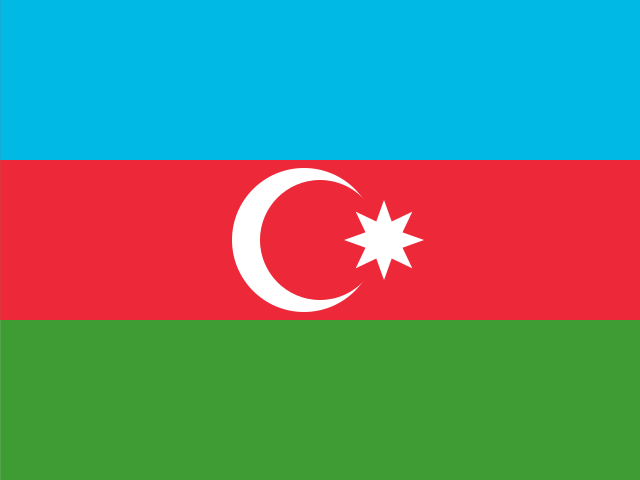
Baki
The capital and largest city of Azerbaijan, known for natural beauty and safety.
Photo by Zulfugar Karimov on Unsplash
Baku enjoys 241 sunny days a year — mild conditions year-round. Monthly cost of living for a solo adult is around $956 — one of the most affordable cities in Europe. Baku stands out for its nature access. On the other hand, learning the local language is important for daily life.
Baku, Azerbaijan runs about $956/mo for a balanced lifestyle, logs 241 sunny days a year, and scores 56% on our safety composite across 2M residents.
Find your city match in 5 minutes
Take the quizFeels-like °C
Dinner outside
Cost of Living
monthly · balanced lifestyle · solo living
Feels-like °C
Dinner outside
Cost of Living
monthly · balanced lifestyle · solo living
Mobility
Culture
Nature & Outdoors
Air Quality
Safety
Career
Social & Community
Food & Dining
Family
Healthcare
PM2.5 annual average of 16.0 µg/m³ exceeds the WHO interim target of 15 µg/m³. The WHO guideline value is 5 µg/m³.
Data sources: WHO (air quality), OECD (safety).
Central Sabail and nearby expat areas have services within 15 minutes, but extreme summer heat over 35-40°C for 4+ months, uneven sidewalks, and traffic hazards penalize walking heavily for daily needs.
Even in mixed-use cores, prolonged pedestrian errands become impractical, pushing car or taxi dependence year-round.
This compromises long-term quality of life for walk-preferring newcomers.
Decent fit
Baku's metro, buses, and new lines serve central and key districts reliably with decent frequencies and integrated options, enabling car-optional routines for many expat needs.
Suburban gaps persist, but populated areas support commutes and outings without driving.
English signage and apps ease newcomer integration for viable daily transit life.
Baku's sprawling geography and heavy traffic congestion during peak hours (7–9 AM, 4–7 PM) extend routine 15–20 minute trips to 40–60 minutes, especially crossing the city from north to south.
Aggressive driving patterns, unpredictable traffic flow, and limited parking enforcement in central areas increase daily stress and significantly reduce efficiency for residents.
Baku permits scooters but they are not a dominant daily transport mode; high traffic speeds, windy conditions, and less-developed two‑wheeler infrastructure reduce practicality.
Short‑term rentals exist but foreigner‑friendly long‑term options and insurance can be limited, making scooters an occasional rather than primary choice.
Baku features minimal disconnected lanes in the center, unsafe amid high-speed boulevards and scant parking for routine trips.
Expats cannot practically bike for errands, leaning on metros or taxis.
This limits sustainable commuting indefinitely.
Heydar Aliyev Airport is about 30 minutes from Baku's center by car in weekday traffic, delivering convenient and reliable airport access for regular flyers.
Expats benefit from this efficiency in sustaining family and work ties abroad, with minimal disruption to daily routines.
The short drive enhances the appeal for long-term stays centered on international connectivity.
Baku serves over 40 direct international destinations across Europe, Asia, and the Middle East with daily flights to London, Istanbul, and Delhi, enabling efficient business and leisure travel.
Multiple carriers including low-cost options provide competition and frequency on key routes.
Expats benefit from good geographic spread, managing most trips directly though some long-haul may still connect.
Baku's airport serves limited low-cost airline routes, with modest regional connections and occasional budget options from Middle Eastern carriers.
Service remains below Western European standards in frequency and network breadth, offering sporadic affordability rather than consistent budget-travel flexibility for long-term residents.
Baku features the Heydar Aliyev Museum and the Azerbaijan National Museum of Art with growing contemporary collections and international exhibitions driven by recent cultural development.
The city provides meaningful art museum access for residents, though collections remain focused on Azerbaijani and regional art rather than the globally significant permanent collections typical of world-class art capitals.
Baku contains several history museums including the Azerbaijan National Museum, Museum of Azerbaijani Carpet and Applied Arts, and the Heydar Aliyev Museum, covering medieval Azerbaijani history, Silk Road heritage, and modern periods.
These institutions provide solid regional historical context and preservation of Caucasian and Islamic cultural narratives, though they operate primarily at a regional level without the international prominence or comprehensive ecosystem of world-class destinations.
Baku's walled inner city (Icherisheher) contains the Maiden Tower and the Palace of the Shirvanshahs and is inscribed as a World Heritage site, forming a compact, well-preserved historic core alongside multiple protected monuments.
This single internationally recognised core plus a broader conserved historic fabric support several recognised heritage sites within the city.
Baku provides expatriates with occasional theatre at a few venues, delivering limited performing arts access that complements a modern urban lifestyle for long-term stays.
Productions offer sporadic cultural dips, fitting expats who value diversity elsewhere, with potential for growth enhancing future appeal.
This level prevents cultural voids without promising abundance.
Baku offers expats several quality cinemas with multiple screens and mainstream international films, ensuring consistent accessibility.
The modern venues facilitate enjoyable nights out that enhance urban living comfort.
Over years, this contributes to a culturally rounded expat experience with reliable film-based socializing.
Baku features a few modern venues for pop, jazz, and local Mugham with somewhat regular programming, but genre breadth and international tours are constrained.
Fans can attend occasionally monthly, providing intermittent cultural relief.
For expats, this enables basic engagement without fostering a music-centered lifestyle long-term.
Expats in Baku access several consistent weekly live music events with genre variety and community draw, integrating smoothly into urban lifestyles.
Predictable venues enable routine enjoyment, fostering connections in a modern setting.
This level enriches long-term expat experiences with steady cultural vibrancy.
Baku has some upscale bars and clubs in Fountain Square and Nizami Street active weekends until 2am, providing limited options for occasional upscale drinks but restricted by alcohol rules and early closures.
Expats face a functional yet constrained scene lacking organic depth for regular social life long-term.
Safety is high, but the regulated vibe tempers lifestyle impact.
Baku's central districts lie on the Caspian Sea shoreline with extensive waterfront boulevards and the sea visible from the city core; residents can reach the coast within minutes and the maritime setting strongly shapes the city.
The Caspian shoreline serves as the city's defining coastal presence.
Baku is on the flat Absheron peninsula with nearby terrain limited to low hills and coastal ridges; the Greater Caucasus and major mountain massifs are several hours’ drive (typically 2+ hours) and not suitable for routine weekend alpine outings.
There is little true alpine/subalpine terrain within an easy short drive of the city.
The Absheron peninsula around Baku is largely semi-arid and urban/coastal; meaningful dense forests are generally located well outside the metropolitan area and typically require more than 45 minutes to reach.
Local vegetation is sparse compared with forested regions elsewhere in the country.
Baku provides several major urban green areas and boulevards (seaside boulevard, upland parks) and recent greening projects, giving residents accessible parks in many districts.
That said, large stretches of dense urban fabric and climatic constraints leave distribution and canopy uneven, so daily access is moderate citywide.
Baku is located on the Caspian Sea and the Absheron peninsula has minimal freshwater lakes or significant rivers in the urban area.
Freshwater lake and river access for residents is limited, so freshwater recreational options are scarce.
Baku features an extended seaside boulevard and large park strips along the Caspian that provide several kilometers of continuous, well-maintained running routes and varied surfaces.
Extreme summer heat can limit midday running, so while routes are strong and scenic, seasonal heat reduces true all-year friendliness.
Immediate surroundings of Baku and the Absheron peninsula are largely low-lying or semi-arid with limited natural mountain trails; significant mountain hiking in the Greater Caucasus or highland villages generally requires multi-hour drives.
For a hiker seeking regular meaningful elevation and varied mountain routes, nearby options are very limited.
Formal camping options close to the city are limited and many outdoor areas suitable for camping are a long drive away; the immediate coastal/urban surroundings have few established campgrounds.
Travelers generally need to travel significant distances to reach mountain national parks with reliable camping infrastructure.
Caspian shoreline and public beaches lie within about 30–45 minutes of central Baku, but shoreline condition and water quality are uneven and the swim season is relatively short (mainly summer months).
These limitations make beach visits possible and common in season but not reliable enough for a full beach-centric lifestyle.
Baku sits on the Caspian coast where strong, regular winds on the Absheron peninsula produce reliable kitesurfing and windsurfing conditions within the city/nearby beaches, and local schools/rentals and a visible wind-sports community exist.
While oceanic surfable swell is absent, the consistency and strength of wind-based coastal watersports make this a strong location for windsurfing/kiting accessible within 30 minutes.
Baku fronts the Caspian Sea, where water conditions are variable and coastal activity is limited by turbidity, industrial influence and lower biodiversity; a small amount of local recreational diving exists but quality is generally low.
For newcomers marine snorkeling/scuba is available only in occasional low-quality spots.
Azerbaijan has modern mountain resorts (for example in the Gabala and Shahdag regions) that are reachable by multi‑hour drives from Baku (commonly ~3–5 hours), offering lift systems and runs.
These resorts are accessible for weekend trips but are not on the same scale as major Alpine destinations, so the offer is mid‑range.
The Absheron peninsula around Baku is largely flat and coastal; while there are notable geological sites within a one- to two-hour radius, conventional sport or multi-pitch climbing crags are scarce and main Caucasus climbing areas are several hours away.
Newcomers will find only distant or basic natural climbing options without regular long drives.
Baku's streets feel mostly safe for expats walking day or night in modern and central districts, supported by heavy surveillance and low violent crime allowing women to go alone comfortably.
Minor catcalling in markets is rare and non-disruptive.
The secure environment enables a lifestyle of free exploration and late-night activities without concern.
Moderate property crime in Baku includes opportunistic theft in metros and bazaars, handled by normal caution for expat daily life in residential districts.
Home and vehicle security is straightforward without pervasive break-ins, supporting stable long-term living.
This environment lets relocators prioritize work over heightened belonging protection.
Azerbaijan's road fatality rate is approximately 13.5 per 100,000 residents, placing it in the dangerous band.
Baku combines modern highway infrastructure with chaotic driving culture, minimal pedestrian protection on many streets, and poor enforcement.
High-speed arterials cut through residential areas with inadequate crossing facilities; newcomers must actively restrict walking and cycling on major roads, avoid driving unfamiliar routes at night, and exercise extreme vigilance at intersections.
Baku sits on the Absheron Peninsula near active fault structures in the Greater Caucasus–Caspian region and has recorded occasional M4–M5 events that are felt in the city, but M4+ shocks are not a multiple-times-per-year occurrence.
Building practices have improved in recent decades, especially for major new developments, reducing casualty risk though some older structures remain vulnerable.
The lived experience is occasional, not constant, earthquake awareness.
Baku’s urbanized, semi-arid coastal environment and limited surrounding forest reduce the likelihood of significant wildfires affecting daily life; grass or steppe fires occur but rarely produce prolonged citywide smoke or large evacuations.
Newcomers can generally expect little disruption from wildfire risk.
Baku is a low-lying coastal city on the Caspian Sea with generally limited history of widespread urban inundation; occasional heavy rain can cause localized street flooding in areas with constrained drainage.
For most residents, floods are infrequent and typically produce minor, short-lived disruptions rather than major lifestyle impacts.
Baku offers 15-20 cuisines including Lebanese, Indian, Japanese, and Mexican across Nizami and Fountain Square districts, giving expats good access to world flavors amid local Azerbaijani.
This variety enhances long-term life by enabling cultural dining rotations that feel worldly and convenient.
While some niches lack depth, it fosters a rewarding explorer's routine without major gaps.
Baku offers solid plov and kebabs with fresh Caspian ingredients in neighborhood spots, underpinned by Azerbaijani traditions at multiple price points.
Decent consistency allows food lovers to eat well regularly in local settings.
This fosters a reliable dining experience for expat life.
Baku provides modest brunch in Fountain Square and Old City areas, with several cafes serving plov-inspired options inconsistently.
Expats can access weekend spots centrally, supporting moderate social habits.
Long-term, it integrates with vibrant street food, though dedicated brunch lacks depth for variety seekers.
Baku has very limited vegan and vegetarian restaurants, sparse amid oil-rich cuisine, testing expat commitment long-term.
Options cluster centrally with low reliability, pushing cooking or risky adaptations elsewhere.
It permits survival but curtails culinary joy and social ease in daily life.
Baku has a moderately developed delivery ecosystem with 2–3 platforms (including international and local apps) providing coverage across central and mid-ring neighborhoods with a fair range of Azerbaijani, Caucasian, and international restaurants available for delivery.
Delivery times typically range from 35–55 minutes in covered areas, but suburban and peripheral zones have reduced selection; weekend and evening options exist but are less extensive than major regional hubs.
Baku's public healthcare bars new expats without work-based enrollment, plagued by long waits, low standards, and no English, deeming it unusable.
Expats default to private.
For relocation, this lack elevates risks and expenses, constraining health security and overall life quality.
Baku's private hospitals like Liv Bona Dea cover most specialties with modern equipment, 1-2 week specialist waits, and improving English staff for expats.
International insurance works reliably for routine to intermediate care, bolstering confidence in daily health management over public alternatives.
Rare cutting-edge options may lag, but it's functional for sustained relocation.
Baku is a large capital with substantial international activity in energy, construction and services; major energy companies and related professional roles create regular openings for foreigners, but hiring is concentrated in a few sectors and local languages are often required.
Because the market is less diversified for non‑energy professionals, a qualified foreigner can find work but with more sectoral constraints (commonly within 2–4 months).
Baku is the national economic powerhouse driven largely by oil and gas, with substantial government and energy-sector corporate presence; however, the economy is concentrated in hydrocarbons and metro GDP is typically placed in the tens of billions rather than the hundreds.
The concentration in a single resource-intensive sector limits diversification and the depth of a globally sophisticated professional services ecosystem, so it aligns with an emerging-but-resource-dominated economy.
Baku’s economy remains heavily dependent on energy (oil & gas) which drives a large share of professional roles; other active sectors include construction, logistics/transport, finance and tourism, but energy’s dominance constrains overall sectoral balance.
The city has some diversification, but dependence on one major industry reduces resilience.
Baku shows early-stage entrepreneurial activity with some accelerators and state- and corporate-backed programs, and a small pool of startups and angels, but organic local VC and repeat independent founder-backed exits are limited.
Because a notable portion of support is government or corporate-sponsored rather than a broad independent VC market, the ecosystem's depth for organic, founder-led scaling is constrained.
Baku has a moderate multinational employer presence concentrated in energy, engineering and services, including major oil-and-gas companies and several large contractor and service operations with substantial local staffs.
The market offers multiple sizeable multinational employers, but the variety of regional HQs across sectors is limited compared with larger global hubs.
Baku supports roughly 10–20 dedicated coworking venues in central business districts, combining local boutique spaces and a limited number of international operators; facilities typically include meeting rooms, printing and business‑class internet.
The ecosystem gives remote professionals workable mid‑range options and community events, though widespread 24/7 enterprise‑level capacity across all neighborhoods is limited.
Baku hosts major sectoral conferences—particularly in energy and trade—and corporate networking opportunities tied to these events, and has active chambers of commerce, but routine grassroots meetups across multiple industries in English are less common.
For an international professional, meaningful contacts are attainable around large conferences and corporate events, but everyday, English‑accessible meetups are limited.
Baku's 6-8 universities span oil engineering, business, medicine, and humanities, with emerging English programs and research tied to energy innovation, serving as a regional draw.
Students animate central boulevards with cafes and cultural spots, offering expats accessible academic events.
This solid foundation supports professional growth and city dynamism for relocators.
Azerbaijan has a record of periodic blocking and throttling of social media, messaging and news sites during unrest and has implemented targeted disruptions that have affected communication and cloud services; while many developer tools often remain reachable, users can face meaningful friction and may resort to VPNs during incidents.
Because these restrictions recur and can affect core communications during important periods, practical accessibility for uninterrupted remote work is meaningfully degraded.
English is used in international businesses, some hotels and private clinics, and in sections of central commercial districts, but the bulk of public administration, local healthcare and neighbourhood services function in Azerbaijani or Russian.
For routine official procedures and many medical or utility interactions, English-only speakers will need translation or assistance.
Baku has 3-5 international schools offering British, American, and some IB curricula with partial accreditations, though waitlists and location clustering limit flexibility for new expat families.
Long-term residents find adequate but not ideal choices, influencing housing decisions and children's extracurricular access.
This ecosystem provides workable education yet requires compromises on preferences.
Baku features some playgrounds in central areas but sparse coverage in average residential zones, with variable maintenance and equipment age-appropriateness.
Many families plan trips rather than enjoying 5-10 minute walks, reducing daily play ease.
This impacts long-term family life by making child-friendly outdoor access less intuitive.
Baku has developing supermarket infrastructure with chains like Carrefour and local operators present, but coverage remains concentrated in central and affluent areas with gaps in residential neighborhoods.
Fresh produce is available, and international product selection has grown to accommodate expat populations, though consistency and variety are more limited than Western cities.
Grocery shopping is functional but uneven across the city.
Several good-quality malls in Baku offer modern facilities, reliable retail including global brands, and dining, accessible city-wide.
Relocating expats enjoy consistent options for clothing, tech, and leisure that ease settling in, promoting a cosmopolitan feel in routines.
This availability enhances long-term quality of life through dependable urban amenities.
Baku offers limited specialty cafés beyond chains, with single-origin scarce, challenging daily high-quality access for coffee lovers.
Expats navigate patchy quality, settling often for standard espresso in routines.
This shapes a functional but uninspired coffee life long-term.
In Baku, gyms in key neighborhoods offer solid equipment for most styles and some group activities, providing expats with feasible daily access for serious training.
Uneven spread and quality dips in residential outskirts require selective choices, slightly impacting ease.
This enables a contented fitness lifestyle with tolerable inconsistencies.
Baku's good sports infrastructure gives expats reliable halls for futsal and basketball, supporting steady team participation and local ties.
This facilitates enduring health benefits and community building essential for relocation.
Modern venues enhance convenience in urban living.
Expats in Baku access several consistent wellness centers featuring certified therapists, multiple treatments including hammams, and good public availability, promoting regular rejuvenation in a modern urban context.
These facilities bolster long-term physical and mental health, fitting seamlessly into professional expat schedules.
The quality elevates daily life comfort reliably.
Baku features 1-2 well-maintained yoga studios with consistent basic classes, allowing expats introductory access to practice that eases urban transition, though style variety is restricted.
Central locations aid convenience for ongoing use.
This level provides essential wellness support for long-term oil-city living without abundance.
No specific climbing gym information was found in available search results for Baku.
As a major capital, limited climbing facilities may exist, but absence of documented gyms suggests underdeveloped infrastructure.
Baku provides some modern tennis clubs and public courts, with pickleball nascent, allowing expats periodic games amid urban development.
This level integrates light sports into expatriate routines, enhancing leisure.
Long-term, it meets basic demands but lacks abundance for daily use.
Baku offers only 1-2 poorly maintained padel courts with limited access, making it tough for expats to play regularly.
The absence of clear systems hinders spontaneous games, impacting work-life balance through sports.
Long-term residents miss out on padel-driven community building, relegating it to occasional novelty.
Baku has several quality martial arts facilities including taekwondo, judo, and combat sambo with professional setups across key districts.
Expats benefit from accessible, high-standard training that fosters fitness, confidence, and connections vital for enduring city life.
This variety ensures long-term practitioners can thrive without significant gaps in their routines.
Social & Community Profile
Baku has a lively social atmosphere. Expat integration can be challenging, and learning the local language helps.
Community & Vibe
Urban atmosphere and local social life
Urban Energyin BakuGood
in Baku
Fountain Square and Bulvar offer visible street activity, dining, and markets by day, with some late-night cafes and cultural shows in central zones. Events like music festivals provide sparks, though regulated spaces temper intensity. Expats can find moderate stimulation for social life, with easy access to quieter areas for balance over years.
Street Atmospherein BakuVery Good
in Baku
Baku's Fountain Square, Nizami Street, and seaside boulevards hum with markets, tea houses, and strolling crowds, offering expats a dynamic mix of order and vibrant socializing. Modern contrasts with old carpet vendors create engaging street theater. For relocation, this energy sustains an adventurous lifestyle with rich opportunities for cultural immersion and casual daily bonds.
Local-First Communityin BakuModerate
in Baku
Baku residents are reserved toward outsiders, requiring significant effort to forge authentic local friendships amid cultural conservatism. Newcomers may face prolonged social hurdles, leaning on expat circles, which can hinder full immersion and early quality of life. Over years, dedication unlocks deeper ties, but initial caution tempers the relocation experience.
Multicultural Mixin BakuGood
in Baku
Baku features moderate diversity with Azeri dominance tempered by Russian, Lezgin, and expat oil worker communities forming distinct neighborhoods and services. Expats benefit long-term from international schools, dining variety, and multicultural events that ease relocation amid a majority Azeri culture. This balance supports professional networks and social variety without erasing local identity.
Expat Life
Expat community, integration, and immigration policy
Expat Integration Experiencein BakuModerate
in Baku
Azerbaijani is difficult to learn with Cyrillic script, and while English proficiency exists among educated professionals and the oil industry, integration requires navigating government, healthcare, and daily life in local language or through costly translators. Azerbaijanis are hospitable but maintain strong social hierarchies and insider/outsider cultural norms; genuine integration into local social circles is challenging, and many expats remain in international bubbles despite long residence.
Expat-First Communityin BakuModerate
in Baku
Baku's expat community is small and concentrated with some online threads and infrequent events, taking weeks of effort to access for new arrivals. This setup risks extended isolation early on, challenging immediate quality-of-life gains from social ties. For long-term living, it means gradual building of an international circle amid a less structured scene.
Government Immigration Friendlinessin BakuModerate
in Baku
Azerbaijan provides formal work and business visas and permits but practical entry/settlement for long‑term employment typically requires a sponsoring employer and several in‑person procedures. Processing and documentation requirements can be opaque, language support in government offices is limited, and clear, low‑barrier long‑term pathways are less available, so the system is restrictive for many foreign workers.
Language
English support for daily life and administration
Everyday Englishin BakuModerate
in Baku
English is used in international businesses, some hotels and private clinics, and in sections of central commercial districts, but the bulk of public administration, local healthcare and neighbourhood services function in Azerbaijani or Russian. For routine official procedures and many medical or utility interactions, English-only speakers will need translation or assistance.
Admin English Supportin BakuModerate
in Baku