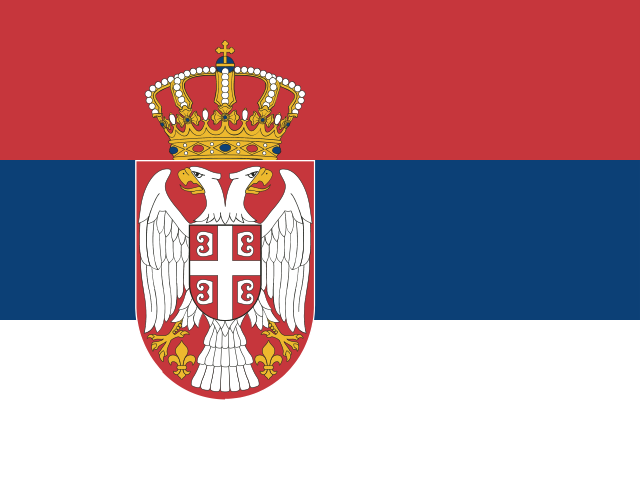
Central Serbia
The capital and largest city of Serbia, known for cultural depth and natural beauty.
Photo by Nikola Tasic on Unsplash
Belgrade enjoys 205 sunny days a year, with frosty winters and limited daylight. Monthly cost of living for a solo adult is around $1,195 — one of the most affordable cities in Europe. Belgrade scores highest in culture, nature access, and social life. English works for most daily situations, though some local language helps.
Belgrade, Serbia runs about $1,195/mo for a balanced lifestyle, logs 205 sunny days a year, and scores 48% on our safety composite across 1.2M residents.
Find your city match in 5 minutes
Take the quizFeels-like °C
Dinner outside
Cost of Living
monthly · balanced lifestyle · solo living
Feels-like °C
Dinner outside
Cost of Living
monthly · balanced lifestyle · solo living
Mobility
Culture
Nature & Outdoors
Air Quality
Safety
Career
Social & Community
Food & Dining
Family
Healthcare
PM2.5 annual average of 17.6 µg/m³ exceeds the WHO interim target of 15 µg/m³. The WHO guideline value is 5 µg/m³.
Safety score of 2.4 out of 5 is below the midpoint threshold. Consider researching specific neighborhoods and recent trends.
Data sources: WHO (air quality), OECD (safety).
In central districts like Stari Grad and Savamala, popular with expats, supermarkets, pharmacies, and services are within 15-minute walks amid vibrant mixed-use streets with decent sidewalks and crossings.
Pedestrian safety and infrastructure allow reliable daily errands on foot year-round in moderate climate, though uneven pavement in spots requires caution.
Outer areas are more car-reliant, but core living enables a functional walking lifestyle for newcomers.
Decent fit
Belgrade's buses and trams cover central corridors adequately for basic trips, but infrequent service beyond peaks and major residential gaps make transit a secondary option for expats.
Car-free living proves challenging for full daily routines, especially evenings and suburbs, pushing reliance on driving or rideshares.
Newcomers find it functional as backup but not primary for long-term car-optional lifestyle.
Belgrade's severe rush-hour congestion (6–9 AM, 3–7 PM) regularly extends routine 20–25 minute trips to 40–60 minutes, particularly crossing the Danube bridges.
Unpredictable traffic flow, limited parking enforcement leading to chaotic street parking, and stressful driving conditions significantly reduce efficiency and daily quality of life for car-dependent residents.
Belgrade has a visible motorbike/scooter presence and accessible rental/purchase options, with milder winters than northern Europe and generally ridable conditions for much of the year.
Road safety and chaotic traffic raise risk, but an expat could reasonably use a scooter for many daily trips while accepting some safety and licensing friction.
Belgrade lacks dedicated bike lanes on most roads, with chaotic traffic and no protections making cycling highly unsafe and impractical for commuting or errands as a relocating expat.
Minimal parking and absent bike-share force total dependence on cars or walking, severely limiting mobility options.
Long-term, bikes remain recreational curiosities rather than transport tools.
Belgrade's Nikola Tesla Airport lies about 50 minutes from the center under normal traffic, sufficient for regular travel but requiring buffer time that impacts scheduling for busy expats.
This duration is merely adequate for maintaining family or professional ties abroad, adding a layer of planning to frequent journeys.
Long-term residents adapt to this as a standard part of an otherwise connected urban life.
Belgrade offers direct flights to 30-40 international destinations, primarily Europe and the Middle East with growing links to the US like New York, supporting weekly escapes to regional leisure spots.
Daily services on key European routes provide reliability, but long-haul options lack frequency and breadth for seamless global access.
Expats can handle nearby travel easily but anticipate layovers for farther destinations, affecting travel spontaneity.
Belgrade's airport serves as a regional low-cost hub with presence from Ryanair, Wizz Air, and regional carriers offering reliable routes across the Balkans and to Central/Western Europe.
While stable budget connections support planned regional travel, the airport operates at a smaller scale than major EU hubs, providing moderate rather than extensive cost savings and scheduling flexibility.
Belgrade has the Museum of Contemporary Art and the National Museum of Serbia, with collections reflecting local and regional artistic heritage.
The museum landscape, while culturally important to residents, remains limited in international collections and does not provide the regular exposure to world-class contemporary and historical art that larger capitals offer.
Belgrade hosts multiple history museums including the National Museum of Serbia, Museum of Yugoslav History, and Topola Mausoleum, covering medieval Serbian kingdoms through modern periods with substantial archaeological collections.
While these institutions provide strong regional historical context and preservation efforts addressing Balkan and Southeast European narratives, they lack the international scale and comprehensive ecosystem classification that would elevate them to world-class status.
Belgrade hosts important landmarks such as the Kalemegdan fortress complex, large historic churches (e.g., Saint Sava) and distinct historic neighbourhoods, giving the city several recognised sites.
However, these are primarily national/regional assets without a designation density or multiple international inscriptions that would move it into a higher band.
Belgrade's active performing arts offerings give expatriates reliable access to drama, musicals, and occasional international shows, supporting a culturally rich long-term residency.
Regular productions enable seamless integration into the social fabric, with affordable tickets enhancing lifestyle affordability and enjoyment.
This level sustains interest for years, offering variety amid everyday urban living.
Expats in Belgrade benefit from various cinemas providing consistent mainstream films and some original-language showings, supporting an active social calendar.
The spread of venues ensures accessibility across neighborhoods, making film a practical pastime for unwinding.
Long-term, this sustains entertainment options that blend local flavor with global appeal, aiding cultural adaptation.
Belgrade boasts numerous venues spanning clubs to halls with frequent programming across rock, turbo-folk, indie, and electronic genres, fueled by a passionate local scene and regular international tours.
A music lover could enjoy shows multiple times weekly, making it a vibrant hub that elevates daily expat life with energy and variety.
Long-term, this strong ecosystem supports deep immersion and social connections through music.
Belgrade's frequent live music events multiple times per week, with diverse genres and notable artists, immerse expats in a lively scene that feels energetic and inclusive.
Touring acts and festivals create memorable highlights, enriching social life and cultural depth for long-term stays.
This robust offering significantly elevates daily quality of life through abundant, high-caliber options.
Belgrade boasts world-class nightlife with splavovi river barges, underground clubs like 20/44, and bar crawls across Savamala and Dorćol active every night until dawn or later, offering unmatched variety from turbo-folk to techno for daily social immersion.
Expats thrive in this organic, resident-driven culture that's globally renowned, fostering deep connections and an exhilarating long-term lifestyle.
Safety in popular venues is high despite late hours, minimizing risks for frequent outings.
Belgrade is an inland river city; the nearest Adriatic shore is several hundred kilometres away and typically requires 4+ hours of travel by car, making the sea inaccessible for routine visits.
The sea does not form part of daily urban life.
Belgrade has nearby uplands such as Avala (≈510 m) about 20–30 minutes away and other hilly/forested areas within an hour; these provide genuine trails and scenic ridgelines for regular day trips.
Larger Serbian ranges (Kopaonik, Zlatibor) exist but require several hours’ travel, so local mountain access is practical but moderate in scale.
Notable forested areas and wooded parks (such as Košutnjak and Topčider) lie within the urban area and the Avala massif is a short drive from the city edge, reachable within minutes to under 30 minutes.
These areas provide substantial tree cover and larger forest habitats adjacent to the city.
Belgrade offers large historic and recreational parks (Kalemegdan, Topčider, Košutnjak) and riverfront promenades, but green space distribution and upkeep are mixed across neighborhoods.
Some areas enjoy good daily access while denser urban zones have limited pocket parks, so usability varies by district.
Belgrade sits at the confluence of the Sava and Danube and includes prominent recreational water areas such as the Ada Ciganlija lake/peninsula and multiple riverbank beaches and islands.
These multiple, maintained freshwater and river locations within the urban area offer broad and regular recreational use.
Belgrade offers extensive options including long Sava/Danube embankments and the Ada Ciganlija recreational island with an approximately 6–8 km loop, plus forested areas (Košutnjak) and nearby hills for trail runs.
While some central streets have heavy traffic, the dedicated riverfront and island loops provide safe, scenic, multi-surface running.
There are nearby hills (Avala ~30 km, summit ~500 m) and forested trails within about 30–60 minutes, but elevations are modest and route variety is limited; larger mountain ranges are several hours away.
The local options allow occasional day hikes but do not provide extensive, sustained mountain hiking close to the city.
There are some basic campsites and riverside informal camping options in the wider region, but few well-developed, high-quality campgrounds within a short drive; higher-quality mountain camping requires several hours’ travel.
Overall infrastructure and proximity to major national-park camping is limited compared with nearby EU cities.
Ada Ciganlija is inside the city (about 15–30 minutes) and provides sandy shores, sports, cafes and a regular summer crowd, with a practical swim season roughly May–September (around 4–5 months).
While well integrated into city life in season, river water quality variability and the limited warm-season window constrain a full year-round beach lifestyle.
Belgrade is inland on the Danube with the Adriatic coast multiple hours away (commonly 6+ hours to Montenegro/Croatia), so regular ocean watersports access is not practical.
There is no nearby ocean coastline for routine surfing or coastal kitesurfing.
Belgrade is an inland river city with river and quarry dive sites but no nearby marine coastline (several hundred kilometres to the Adriatic), so scuba/snorkel options are limited and mostly seasonal or club-based freshwater activities.
There is not regular, high-quality coastal snorkeling available without long travel.
Serbia’s main ski area (Kopaonik) is the primary option from Belgrade at roughly 290–320 km (~3.5–4.5 hours), offering multiple lifts and runs but a more limited network and season compared with Alpine resorts.
There are only a few smaller local hills closer in, so the city’s practical offer is mid‑range and requires several hours travel.
Belgrade has only limited immediate rock (small local crags such as Avala) and the more substantial climbing regions (gorges and mountain crags) are generally around 60–120 minutes away.
As a result, natural climbing is available within a 60–90 minute range but the nearest options are not extensive or highly diverse.
Expats in Belgrade walk comfortably day and night in residential and central areas, benefiting from low violent crime rates and rare harassment that lets women move freely after dark.
Calm streets and community-oriented vibe minimize safety worries, with petty incidents avoidable through common sense.
Long-term living here means personal safety rarely influences decisions, promoting an active outdoor lifestyle.
Belgrade has noticeable property crime including frequent pickpocketing on buses, phone snatching, and high bike theft rates, demanding vigilant habits from expats during daily market visits and commutes.
Residential burglaries and car break-ins occur often enough to require secure storage but not full security setups.
Newcomers must maintain awareness to protect belongings, impacting lifestyle with recurring minor losses.
Serbia's road fatality rate is approximately 11.5 per 100,000 residents, placing it in the dangerous range.
Belgrade exhibits aggressive driving culture with high speeding prevalence, poor pedestrian infrastructure on many streets, and inconsistent rule enforcement.
Drunk driving and uninsured motorists create unpredictable hazards; newcomers must actively avoid crossing outside marked areas, refrain from cycling on major roads, and exercise extreme caution when driving, particularly at night.
Belgrade sits in a region of moderate seismicity within the Balkan and Pannonian systems where felt earthquakes occur infrequently (typically every few years) and damaging events are uncommon.
Building standards in the city are generally adequate for occasional earthquakes, though some older masonry buildings present localized vulnerability.
Earthquakes are a low-to-moderate, occasional lifestyle factor rather than a constant reality.
Belgrade’s landscape and climate produce occasional seasonal fires in nearby hills and rural areas, with smoke episodes possible during extended dry periods, but large destructive fires inside the city are uncommon.
Newcomers should monitor seasonal fire warnings and have basic preparedness measures for dry months.
Belgrade lies at the confluence of the Sava and Danube and has experienced major flood events in the past that caused substantial infrastructure damage and required large-scale responses; some low-lying neighborhoods remain exposed and urban drainage can produce localized flooding during heavy rains.
Although catastrophic events are not annual, the combination of riverine and pluvial risk leads to noticeable flooding risk that can disrupt mobility and routines during high-water periods.
Belgrade provides good variety with 15-20 cuisines such as Chinese, Indian, Mexican, and Korean across Savamala and Zemun, enabling food lovers to enjoy global options integrated into neighborhood routines.
For expats, this means reliable diversity for entertaining or personal indulgence, enriching daily life amid local dominance.
Specialty rarities are present but not overwhelming, fitting a solid ongoing exploration without excess travel.
Belgrade impresses with excellent ćevapi, pljeskavica, and ajvar from street grills to skilled mid-range spots in local neighborhoods, showcasing deep Serbian barbecue traditions and fresh ingredients.
High consistency and notable venues across tiers make it a joyful hub for food lovers.
Relocators experience sustained excitement in daily dining life.
Belgrade features modest brunch availability mainly in Savamala and Dorćol, with several spots offering basic eggs and pastries but limited diversity for frequent visits.
Expats can enjoy occasional weekend brunches, though inconsistency may require planning ahead.
Long-term, this means simpler social dining integrated with local cafe culture rather than a dedicated scene.
Belgrade provides several vegan and vegetarian restaurants around key areas like Savamala, giving expats solid choices for plant-based Serbian twists and international fare.
This enables consistent dining enjoyment over years, though diversity and reach beyond the center are limited, encouraging some self-sufficiency.
It delivers a reassuring quality of life with cultural integration through accessible options.
Belgrade has a developing delivery infrastructure with 2–3 platforms (Wolt, Bolt Food, local options) offering reasonable coverage in central and inner neighborhoods with moderate restaurant variety spanning Balkan, Mediterranean, and international cuisines.
Delivery times are typically 35–50 minutes, but suburban areas have fewer options and less reliable service; weekend availability is fair, though 24/7 delivery remains limited.
In Belgrade, expats encounter complex enrollment tied to residency or work, with public GPs accessible after delays but specialists facing 3+ month waits amid overcrowding.
Minimal English support requires personal translators, restricting confident use beyond crises.
This major friction shapes long-term living by compelling substantial private spending, undermining public system reliability for newcomers' daily health concerns.
Belgrade has several private clinics like Bel Medic and Acibadem, providing faster routine care and some specialists, but English support is inconsistent and complex procedures often demand additional city travel.
Expats can manage basic needs privately, yet spotty insurance acceptance and limited advanced options create uncertainty for serious long-term health reliance.
This setup offers improvement over public care but falls short of seamless expat usability.
Belgrade is Serbia's largest labour market with a growing IT outsourcing and startup scene and several international businesses recruiting in English; demand exists particularly in tech and services.
However overall market scale and language expectations limit breadth, so a qualified foreigner should expect a 2–4 month job search rather than immediate placement.
Belgrade is Serbia’s primary commercial and administrative center with a growing IT and services sector and presence of international banks and professional firms, yet its metropolitan economic output remains modest (well under $50B).
The economy is more nationally significant than globally, so while it offers diverse industries, it lacks the scale and concentrated HQ presence of higher-tier economic nodes.
Belgrade hosts a mix of government/public administration, ICT and software services, finance, manufacturing, creative/media, education/research and logistics — roughly 5–7 meaningful sectors.
The variety creates moderate career flexibility, although some sectors remain smaller compared with larger European capitals.
Belgrade has a growing entrepreneurial community, university-linked incubators and a steady stream of engineering talent, plus occasional regional exits, but local institutional VC is still modest and there are few domestically based late-stage investors.
The ecosystem supports early-stage formation and seed funding, but later growth often depends on regional or international capital.
Belgrade offers a moderate set of multinational employers including bank branches, service centres and an expanding IT/outsourcing cluster with several foreign firms operating substantial local teams.
While there are real opportunities across sectors, few companies use Belgrade as a major regional HQ, so depth is moderate rather than strong.
Belgrade has a strong and growing ecosystem with 25+ dedicated coworking venues across Vračar, Dorćol, Novi Beograd and the city center, including international/regional chains and numerous premium and boutique operators.
High‑quality internet, meeting rooms, regular community programming and several 24/7 options are common, giving remote professionals a wide variety of reliable choices.
Belgrade has an expanding calendar of tech, creative and business meetups, several coworking spaces and accelerators that run recurring events, and periodic international conferences which attract regional decision‑makers.
While not at the scale of major Western European hubs, these regular, private‑sector activities are accessible to internationals in English in many sectors and support meaningful network building.
Belgrade boasts 10+ universities with comprehensive fields including medicine, arts, and engineering, several English programs, and a research scene that spills into public innovation events.
A substantial student crowd defines bohemian neighborhoods with buzzing cafes, music venues, and debates, creating an exhilarating vibe for expats.
This ecosystem supports ongoing education and cultural immersion essential for long-term thriving.
Serbia generally allows access to Slack, Zoom, Google Workspace, GitHub, cloud consoles and messaging apps without VPN; core productivity tools are usable for long‑term remote work.
There have been episodic, short‑term throttles or partial restrictions around protests or elections, so occasional friction is possible but not the norm.
Belgrade offers a solid level of English in restaurants, private healthcare, larger banks and among younger professionals, enabling most daily needs to be met in English with moderate effort.
Still, government offices, many municipal interactions and local neighbourhood services primarily use Serbian, so expats encounter regular language barriers for official matters.
Belgrade offers only 1-2 modest international schools with narrow British or IB options, lacking strong accreditations and prone to capacity issues for new arrivals.
Expat families encounter real barriers to quality education, affecting children's transition and long-term academic prospects in daily life.
Limited availability heightens relocation stress, often necessitating compromises or external solutions.
Playgrounds in average Belgrade neighborhoods are sparse, with uneven quality and dated equipment often requiring planned trips beyond walking distance for safe play.
Many families drive to better central parks, limiting spontaneous daily use for young children.
This setup challenges long-term expat parents seeking integrated outdoor routines, impacting convenience and consistency.
Belgrade has moderate supermarket coverage with chains like Maxi, Idea, and Carrefour, though density is uneven across neighborhoods, creating some areas with limited walking access to modern stores.
Fresh produce quality is acceptable and some international products are available, but selection varies significantly by location.
Grocery shopping works but requires more planning than in cities with dense, consistent supermarket networks.
Belgrade features several quality malls with consistent retail, dining variety, and some international options, accessible across the city via public transport.
Long-term expats experience eased adaptation through these hubs that cover essentials like groceries and fashion, supporting a vibrant urban lifestyle.
Modern setups provide enjoyable, hassle-free shopping that bolsters daily comfort.
Belgrade's nascent specialty presence means rare single-origin or pour-over amid traditional cafés, challenging a coffee enthusiast to find consistent quality daily.
Basic options dominate, so expats may rely on chains or settle for less, affecting routine satisfaction near home or work.
Long-term, this limits the joy of discovery, pushing adaptation to simpler coffee habits.
Belgrade's gym scene allows fitness enthusiasts to find workable facilities with standard weights, machines, and some classes in urban core areas, enabling consistent training as part of expat daily life.
Patchy distribution and inconsistent maintenance or ventilation in less central spots lead to compromises like crowding during peaks.
This level sustains motivation but lacks the reliability for an exceptional experience across the city.
Belgrade's intense football culture provides expats with pervasive access to indoor futsal halls and team sports venues, immersing newcomers in passionate local leagues and matches.
This dynamic environment fosters profound social bonds and physical engagement, defining daily life and long-term community ties for sports enthusiasts.
The abundance ensures effortless integration into the football-centric lifestyle.
Belgrade offers expats 1-2 reliable wellness spots with basic structured services like massages, providing occasional relief but limited by fewer options and treatment variety for deeper routines.
This supports minimal long-term self-care needs yet may require planning around availability, impacting spontaneity in wellness integration.
For newcomers, it means functional but not comprehensive quality-of-life enhancement.
Expats in Belgrade benefit from several accessible yoga studios providing structured classes in multiple styles by experienced instructors, helping maintain fitness and reduce relocation stress through routine sessions.
Consistent availability across the city supports habit formation, though peak times can be busy.
It offers a practical wellness outlet for enduring Balkan lifestyle adjustments.
No climbing gym data was found in search results for Belgrade.
As a major Balkan city, basic facilities may exist, but absence of documented gyms suggests limited or underdeveloped climbing infrastructure.
Belgrade offers good tennis court access through municipal facilities and clubs, with pickleball emerging in fitness centers, allowing expats reliable play options citywide.
It facilitates an engaging sports lifestyle, combining physical activity with social events.
For long-term stays, this ensures sustained racket sports participation amid urban amenities.
Belgrade features 1-2 reliable padel venues with decent courts, but limited slots and community mean expats compete for access during peak hours.
This supports infrequent games for fitness and socializing, yet requires flexibility in scheduling.
Long-term residents can enjoy padel as a supplementary activity, though it won't dominate recreational options due to scale constraints.
Belgrade boasts many high-quality martial arts gyms, including strong programs in wrestling, karate, and MMA with renowned coaches and frequent competitions accessible citywide.
Long-term expats enjoy seamless integration into a passionate scene that boosts physical prowess, mental toughness, and local networks, making it ideal for serious practitioners.
Proximity and variety minimize barriers, enriching urban living experiences.
Social & Community Profile
Belgrade has a lively social atmosphere. Expat communities exist but integration takes effort, and English works for daily basics.
Community & Vibe
Urban atmosphere and local social life
Urban Energyin BelgradeVery Good
in Belgrade
Splavovi rafts and Skadarlija throb with relentless nightlife, live music, and crowds into the early hours, paired with vibrant daytime markets and street energy across neighborhoods. Frequent festivals, subcultural scenes, and a fast-paced social momentum keep the city palpably alive. Long-term expats will find this high density of activity deeply satisfying for urban stimulation, embedding a sense of constant excitement in daily life.
Street Atmospherein BelgradeExcellent
in Belgrade
Belgrade's streets pulse with intense chaos and color from pedestrian-only Knez Mihailova, splavovi river parties, and nonstop café banter, immersing expats in a highly interactive environment perfect for extroverted lifestyles. Constant street vendors, musicians, and crowds create unbreakable social momentum that quickly dissolves newcomer loneliness. For long-term relocation, this electric atmosphere delivers thrilling daily adventures and deep cultural bonds through unrelenting public energy.
Local-First Communityin BelgradeVery Good
in Belgrade
Belgrade's vibrant social scene fosters a warm local culture where newcomers integrate relatively easily through casual interactions in kafanas or events, quickly forming inclusive bonds. This openness minimizes isolation for expats, enhancing daily life with authentic friendships that feel like family from early on. Long-term relocators benefit from strong community ties that boost emotional well-being and cultural belonging.
Multicultural Mixin BelgradeLow
in Belgrade
Belgrade's very low diversity, rooted in a strong Serbian majority with negligible minorities, offers expats a deeply homogeneous cultural immersion that simplifies local interactions but restricts access to international communities. Long-term relocation here emphasizes Serbian traditions in social life, cuisine, and events, which can feel comforting yet isolating without broader ethnic support networks. This suits newcomers seeking authentic Balkan life over cosmopolitan variety.
Expat Life
Expat community, integration, and immigration policy
Expat Integration Experiencein BelgradeVery Good
in Belgrade
Serbian is learnable for English speakers, and Belgrade has strong English proficiency among younger residents, hospitality workers, and the tech sector, making daily life accessible without local language skills. Serbs are notably warm and socially open to foreigners, actively inviting them into social life; bureaucratic friction is present but manageable, and expats consistently report feeling welcomed into local circles and community life within 6-12 months.
Expat-First Communityin BelgradeGood
in Belgrade
Belgrade has a moderate international community with regular events, several online groups over 1000 members, and casual expat venues, enabling newcomers to build connections within 2-4 weeks of moderate effort. This accessibility supports a smoother long-term relocation by providing social anchors like mixers and hubs that foster friendships and practical advice among internationals. It creates a welcoming entry point, mitigating isolation while allowing gradual local exploration.
Government Immigration Friendlinessin BelgradeGood
in Belgrade
Serbia offers practical options for foreign residents (including a one‑year remote‑worker/digital‑nomad permit and standard temporary work/residence pathways) and predictable national procedures for converting temporary to longer licences. Administration is centralized and generally navigable in major cities, but some paperwork still requires local translators or in‑person steps and formal processing times can vary, so accessibility is moderate.
Language
English support for daily life and administration
Everyday Englishin BelgradeGood
in Belgrade
Belgrade offers a solid level of English in restaurants, private healthcare, larger banks and among younger professionals, enabling most daily needs to be met in English with moderate effort. Still, government offices, many municipal interactions and local neighbourhood services primarily use Serbian, so expats encounter regular language barriers for official matters.
Admin English Supportin BelgradeModerate
in Belgrade