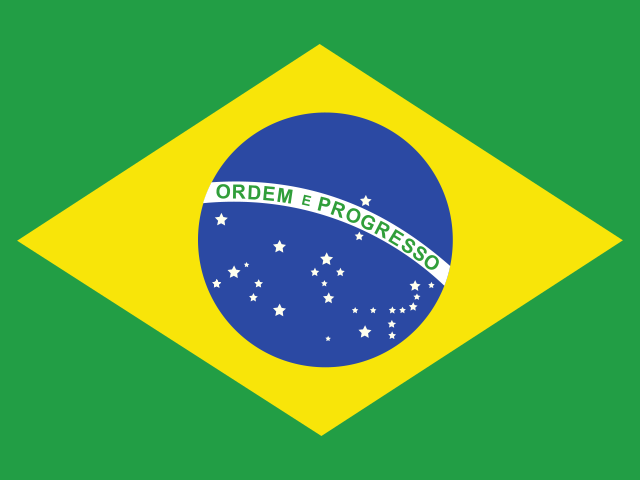
Federal District
The capital of Brazil, known for natural beauty and cultural depth.
Photo by Daniel Costa on Unsplash
Brasília enjoys 276 sunny days a year. Monthly cost of living for a solo adult is around $1,414. Brasília scores highest in nature access and culture. On the other hand, mobility score below average and learning the local language is important for daily life.
Brasília, Brazil runs about $1,414/mo for a balanced lifestyle, logs 276 sunny days a year, and scores 36% on our safety composite across 1.8M residents.
Find your city match in 5 minutes
Take the quizFeels-like °C
Dinner outside
Cost of Living
monthly · balanced lifestyle · solo living
Feels-like °C
Dinner outside
Cost of Living
monthly · balanced lifestyle · solo living
Mobility
Culture
Nature & Outdoors
Air Quality
Safety
Career
Social & Community
Food & Dining
Family
Healthcare
Safety score of 1.8 out of 5 is below the midpoint threshold. Consider researching specific neighborhoods and recent trends.
Data sources: WHO (air quality), OECD (safety).
Brasília's planned superblock design spaces residential sectors far from commercial amenities, requiring vehicles for every daily errand like groceries or banking.
Vast distances and minimal pedestrian infrastructure make walking impractical and unsafe across the city.
Expats face a fully car-dependent existence, severely limiting mobility options and increasing long-term living costs and isolation.
Sparse bus routes across the planned city's vast layout leave enormous gaps, making transit useful only for specific airport or central trips but impractical for daily errands or commuting.
Expats face long waits and poor frequencies, reinforcing total car dependence that isolates newcomers without driving.
Suburban-style design ensures transit cannot sustain car-free lifestyles long-term.
Brasília's planned grid layout provides relatively predictable driving routes with moderate congestion, typically requiring 15-30 minutes for most daily trips within the city.
Parking is abundant and affordable, reflecting the city's car-centric design with ample surface lots and garages.
However, the large geographic distances between sectors and limited alternative transportation mean residents cannot avoid car dependency, reducing overall efficiency despite better infrastructure than organically-developed cities.
Brasília sees substantial motorcycle use across the metropolitan area, with accessible rental and purchase options; the city’s spread-out layout makes two-wheelers practical for many trips.
However, long highway commutes, high-speed arterials, and notable motorcycle accident rates, plus licensing steps for long-term foreigners, mean motorcycles are a practical but not universally ideal primary mode.
The planned layout features some painted bike paths along wide avenues, permitting cycling for shorter central commutes if one tolerates traffic exposure, but vast distances and intersection gaps limit practicality.
Expats would struggle with citywide connectivity for daily life, facing isolation in sprawling sectors without safe links.
Over years, this inconsistency fosters partial bike adoption but reinforces car culture dominance.
Brasília International Airport (Presidente Juscelino Kubitschek) is situated approximately 11km south of the city center.
Under typical weekday morning traffic conditions, the drive takes 15-25 minutes via a straightforward, purpose-built highway connection designed for the planned capital city's efficient movement.
The short distance, predictable traffic patterns typical of Brasília's grid layout, and dedicated airport access make the drive conveniently quick and reliable for residents who travel.
Brasília has about 25 direct international destinations, primarily South American neighbors and limited others with infrequent flights.
This allows expats basic regional access but demands layovers for most global travel, affecting visit frequency to distant family or business spots.
Long-term residents experience functional but not inspiring connectivity, prioritizing domestic over international ease.
Brasília International Airport (Presidente Juscelino Kubitschek) is well-served by Brazilian low-cost carriers including Azul, Gol, and regional budget operators with high-frequency routes connecting to major Brazilian cities.
The airport's role as a domestic hub enables residents to access affordable flights for business and leisure travel across Brazil, supporting regular regional mobility at competitive prices.
Brasília features several cultural institutions including the Museu de Arte de Brasília and galleries showcasing Brazilian contemporary art, but the city's purpose-built modernist design does not translate to a robust art museum ecosystem.
Offerings are modest and focused locally, lacking the depth for serious art collectors or enthusiasts.
Brasília contains history museums focused on Brazilian modernist architecture and 20th-century national history, reflecting the city's contemporary founding in 1960.
The museum offerings are concentrated on modern Brazilian history with limited depth in ancient or pre-Columbian narratives.
The core of Brasília is a formally protected, well-preserved modernist urban ensemble and is inscribed as a World Heritage site covering the planned civic center and architecturally significant government and residential sectors.
The city's masterplan and architectural fabric are internationally recognised and preserved at large scale, creating a rich, distinctive heritage landscape.
Brasília's theatre scene delivers regular performances of various genres through established venues, giving expats dependable access to arts that enhance weekly leisure.
The consistency supports long-term cultural integration, offering a refined outlet amid the city's modern architecture.
Newcomers appreciate it as a reliable booster to quality of life.
Brasília has functional cinemas available, but the selection is more limited and less diverse than larger Brazilian cities.
Programming tends toward mainstream commercial fare with inconsistent access to arthouse, international, or subtitled content, reflecting the capital's smaller cultural cinema scene relative to established entertainment hubs.
Brasília's live music scene is underdeveloped, with most venues offering only occasional programming and a narrow focus on sertanejo and mainstream Brazilian pop.
The city lacks the venue density, consistent weekly shows, and genre diversity needed for regular attendance; international touring artists rarely include Brasília on their routes, leaving limited options for music lovers seeking vibrant nightly performances.
Brasília's live music scene is limited by its planned urban layout and smaller entertainment infrastructure, with occasional events at cultural centers and annual festivals rather than a robust weekly circuit.
While the city has cultural programming, it lacks the venue density and touring artist frequency of larger Brazilian cities, making it less attractive for expats prioritizing active music engagement.
Brasília's nightlife centers on a few bar districts like Asa Norte, with weekend-focused activity and typical 2am closures, offering limited variety for expats beyond basic drinks and music.
The planned layout spreads venues thinly, making regular outings less convenient.
This suits sporadic socialising but doesn't sustain an enthusiastic, frequent nightlife lifestyle for newcomers.
Brasília is located in the country's interior, roughly 1,000 km or more from the Atlantic coast depending on the route, making the sea a long-distance trip rather than local access.
Coastal visits require significant travel time and are not part of routine urban life.
Brasília is on a high savanna plateau with limited nearby alpine relief; the nearest notable highland/chapada areas (national park and escarpments) are typically 3+ hours’ drive, so weekend mountain trips require significant travel.
Local terrain is plateau/rolling rather than true mountains with substantial alpine character.
The built capital sits in the Cerrado biome (savanna) with only limited gallery-forest pockets and urban tree cover; dense, large forests are not present near the city and broadly suitable forested areas are typically well over 45 minutes away.
Local vegetation is more open woodland and savanna than continuous dense forest.
Brasília’s planned urban fabric includes broad green corridors, planted superquadras and major parks (including a very large central park), producing extensive tree canopy and numerous small and large green spaces distributed across sectors.
As a result, residents in virtually all neighborhoods have convenient short walks to quality green areas.
Brasília was planned around the large artificial Lake Paranoá, which provides extensive shoreline access for boating, swimming and watersports across the city.
While largely man-made rather than natural, the lake is large, generally clean in recreational areas and functionally gives the capital widespread accessible water ecosystems.
The planned layout of Brasília includes wide boulevards, park corridors and extensive shoreline around Lake Paranoá that supply long, uninterrupted routes and green spaces for running.
Some residential sectors are car-oriented with variable sidewalk quality, but the major parks and lakeside stretches create strong, scenic running options overall.
Brasília is on a high plateau with cerrado and escarpment trails close by, but substantial mountainous hiking is distant—the best well-known national park hiking (Chapada dos Veadeiros and other plateaus) is typically multiple hours' drive.
Local trails offer interesting terrain but limited elevation gain and route density for a long-term dedicated trail hiker seeking frequent diverse day hikes under one hour.
There are multiple reachable camping areas within roughly 2–4 hours, including cerrado parks and the better-known plateaus and canyons to the north (Chapada region ~200–250 km).
While immediate urban camping is limited, the accessible national and state parks provide several established campgrounds for longer-term outdoor activity.
Brasília is centrally located far from the ocean, with coastal beaches reachable only after extended travel, so beaches cannot be part of a routine daily or weekly pattern for most residents.
The city does not offer accessible swimmable ocean beaches.
Brasília is a landlocked capital far from the ocean (many hundreds of kilometres and several hours by road), so practical, regular access to coastal surf or kitesurf spots is not available to residents without substantial travel.
There is effectively no nearby ocean watersports infrastructure for routine use.
Brasília is centrally located on the plateau, roughly 800–1,000 km from the nearest coast, and lacks local marine snorkeling or reef diving.
The main water bodies are man-made lakes and reservoirs that do not offer accessible ocean-style snorkeling or substantial scuba sites.
Brasília has no alpine skiing facilities and is far from the Andes and the limited southern Brazilian winter-sport locations (both thousands of kilometers away).
There are no groomed runs or lift systems locally, so skiing is not practically available to residents.
Brasília is in a cerrado region with scattered rocky outcrops; notable climbing destinations (Pirenópolis and Chapada areas) are generally around 1–3 hours away, so the city provides some reachable crags in the 60–90+ minute band.
There are few high‑density climbing regions within a short (under 60 min) drive.
Brasília exhibits notable safety concerns with documented robbery and assault in specific areas, though the city's planned layout and lower density create some geographic advantages compared to traditional dense cities.
Safety risks concentrate in certain neighborhoods and evening hours; daytime walking in central business areas and established residential zones is generally manageable, but nighttime walking requires careful neighborhood selection and is often avoided.
Expats develop awareness of which superblocks and times to navigate cautiously, making safety a routine daily calculation without severely restricting lifestyle choices.
Noticeable property crime in Brasília includes recurring vehicle break-ins, bike thefts, and opportunistic thefts on streets and transit, demanding consistent vigilance from expats in residential and work areas.
Long-term newcomers can manage with secure storage and awareness without widespread home invasions, though package and petty losses become routine habits.
This nuisance-level volume impacts affordability and convenience but avoids pervasive physical threats.
Planned wide avenues encourage high speeds with limited crosswalks, raising pedestrian injury risks despite some infrastructure; driving culture shows inconsistencies.
Expats must adapt habits significantly for safe walking or scooting across expansive roads.
Long-term, this shapes cautious lifestyles, favoring cars over active transport.
Brasília is located on a stable continental shield with essentially no meaningful history of damaging earthquakes, so seismic risk is effectively irrelevant to relocation decisions.
Residents should not expect earthquake shaking as part of daily life.
Brasília is surrounded by cerrado savanna where seasonal fires during the dry months are regular and burn large tracts of vegetation, producing smoke that can affect the city and occasionally impact infrastructure or necessitate localized responses.
Newcomers should expect a noticeable seasonal wildfire risk and take preparedness measures.
Brasília is a planned city on a central plateau with relatively robust drainage and few historical instances of widespread urban flooding; heavy rains can cause isolated street flooding but events are rare and usually short-lived.
For most newcomers, rainfall has minimal impact on daily mobility or infrastructure functioning.
Brasília's planned layout yields modest variety with common Italian, Japanese, Arabic, and Chinese options, but shallow depth and few specialties beyond local.
Long-term expats face limited rotation of global flavors, mostly generic adaptations in Asa Sul, leading to potential meal fatigue.
It suffices for basics but disappoints dedicated cuisine explorers.
Brasília's dining leans on chains and shopping mall food courts with mixed local churrascarias, requiring effort to find standout spots amid average preparations.
Culinary ambition feels limited citywide, though some fresh ingredients appear in mid-range options.
Expats may find daily eating functional but uninspiring long-term, often defaulting to predictable meals over exciting discoveries.
Brasília's planned layout limits brunch to modest options in Asa Sul and the airport area, with inconsistent diversity beyond basic buffets.
Expats might face waits or repeats, impacting spontaneous social plans in this car-dependent city.
For long-term living, it means simpler routines, prioritizing home brunches over extensive exploration.
Brasília has modest vegan and vegetarian availability with a small number of dedicated venues, primarily located in the central business and residential areas.
Options are limited compared to larger Brazilian cities, and expats will find the dining scene somewhat restrictive for consistent plant-based choices.
Brasília has several platforms ensuring good coverage, variety from independents to chains, generally reliable 30-45 minute deliveries, and weekend/late options despite its planned layout.
Expats find it practical for daily needs, reducing cooking reliance during work peaks.
It provides solid quality-of-life reliability for newcomers.
Brasília's public healthcare system (SUS) is free in theory but faces significant practical challenges including long specialist wait times (2-4 months), slow enrollment processes requiring residency proof and documentation, and inconsistent English support in public facilities.
Expats can eventually access the system as residents, but the bureaucratic barriers and limited capacity mean most newcomers rely on private care during their first months and for specialist needs.
The system is functional for emergencies and routine GP visits but not practical for expats seeking timely, predictable healthcare access.
Brasília's private healthcare is functional with hospitals and clinics offering specialist services and English-language support, particularly for routine and intermediate procedures.
International insurance is accepted by major private providers, and wait times are typically days rather than weeks.
However, as a planned capital city with a smaller population than São Paulo or Rio, the private sector is less developed and some complex procedures or rare specialties may require travel to larger centers.
Adequate for ongoing expat healthcare needs but not as comprehensive as Brazil's largest cities.
Brasília's labor market is heavily skewed to federal government, embassies and international organizations, producing opportunities mainly in public administration, diplomacy and NGO sectors rather than broad private‑sector hiring.
English‑speaking foreigners generally find roles in these specific niches, but diverse private‑sector international recruitment is limited.
Brasília's economy is dominated by government and public administration, which creates a sizable demand for professional services, construction, and contractors, and hosts national-level institutions and consultancy work.
Although the metro has significant economic output and professional-services presence, its structure is government-weighted and it lacks the diversified corporate HQ base and international financial role required for a higher score.
Brasília is dominated by federal government and public administration employment, supported by construction, professional services, and education/health institutions that largely serve the public sector.
The concentration of professional roles in government reduces private-sector industry breadth, so career switching within truly distinct private industries is limited without leaving the city.
Brasília has a visible cluster of incubators and entrepreneurship programs linked to the public sector and universities but limited independent VC firms and few exits.
The scene is early stage: founders can prototype and validate locally but typically need to access larger investor pools elsewhere for scale.
Brasília is dominated by government, diplomacy and international organisations; while many embassies and NGOs operate there, corporate multinationals generally maintain national or regional offices elsewhere (primarily São Paulo).
As a result, there are very few large multinational corporate employers with substantial local staff.
Brasília has around 10–25 dedicated coworking spaces located in Asa Sul/Norte and Sudoeste, spanning from budget hot-desks to private offices and offering meeting rooms and events.
Infrastructure and internet quality are generally reliable for long-term remote work, though the overall market is not as saturated or varied as the largest Brazilian hubs.
Brasília sustains regular professional events tied to government, diplomacy, NGOs and sector associations, with frequent panels, policy conferences and bilateral chamber activity; many international and embassy‑oriented events are held in English or with international participation.
The private‑sector startup meetup scene is smaller, so networking is stronger for public‑sector, policy and international‑organization professionals than for all private industries.
Brasília provides a solid but more focused university ecosystem with 5-8 institutions emphasizing public policy, sciences, and humanities, alongside some English-accessible programs and research outputs.
Student populations contribute moderately to cultural life in planned neighborhoods, offering expats opportunities for lectures and exchanges without dominating the orderly urban fabric.
As a regional education node, it supports intellectual pursuits and professional development suitable for long-term residents valuing structured academic access.
Brasília users can access Slack, Google Workspace, GitHub, Zoom, WhatsApp and major cloud consoles without VPN, so remote work functions normally.
Authorities have sometimes pursued content removal actions, yet there is no regular, broad blocking of the core tools used by remote professionals.
Although Brasília hosts diplomatic and international communities, Portuguese is the operational language for most government services, healthcare providers and utilities; English is available in embassies, some clinics and corporate offices but not widely across neighborhood-level services.
Daily administrative tasks typically require Portuguese or an interpreter.
Brasília has 2-3 small international schools with minimal curriculum diversity and inconsistent accreditation from major international bodies.
The tight market and planned-city geography mean geographic spread is limited, and waitlists can develop quickly at the few available options.
Relocating families face serious capacity constraints and should plan well ahead.
Brasília's planned urban design prioritizes green space and public amenities, with well-maintained, modern playgrounds distributed across residential neighborhoods; most families can access safe, quality facilities within 5-10 minutes' walk.
Equipment variety is good, shade and seating are typically available, and the city's planning culture supports regular outdoor play for children.
Brasília offers decent supermarket access in most sectors via stores like Carrefour and Extra, with fresh produce and essentials reliably available, though international variety is somewhat limited for expats.
Coverage is uneven in outer areas, but core neighborhoods allow short walks, and hours accommodate evenings, making shopping workable but not exceptional.
For long-term living, it meets basic needs without major frustrations.
Brasília has limited mall infrastructure compared to other major Brazilian cities, with options like Pátio Brasil offering basic-to-moderate shopping and dining.
As a planned capital with a dispersed layout, the city's retail ecosystem is more fragmented and modest in scale, requiring longer travel for comprehensive shopping experiences.
Brasília's coffee culture remains underdeveloped with limited specialty café presence; the scene is dominated by chains and traditional establishments without meaningful focus on specialty beans or alternative brewing.
A relocating coffee enthusiast would struggle to find consistent daily access to quality specialty coffee and work-friendly café infrastructure across the city.
Brasília's gym landscape is limited relative to its sprawling planned-city layout; options are scattered across the superquadras (residential blocks) and central areas with uneven quality and maintenance.
Equipment is often basic, and boutique or specialized group fitness is scarce.
A relocating fitness enthusiast would face geographic fragmentation, limited variety, and inconsistent facility standards, requiring significant compromise.
Expatriates find good public sports infrastructure including indoor arenas for team sports, allowing routine participation in local groups.
Facilities promote fitness and belonging in a planned urban layout, with options for various skill levels.
For relocation, it offers dependable access that sustains an active, connected daily life.
Brasília offers one or two reliable wellness facilities with basic structured services, allowing expats limited but dependable access to massages for occasional relief in its planned, spread-out layout.
This scarcity impacts spontaneity, requiring advance bookings that may disrupt busy diplomatic or professional schedules.
For long-term stays, it supports minimal maintenance of wellness but lacks variety for deeper routines.
In Brasília, expats encounter 1-2 reliable yoga studios offering well-maintained classes but with limited styles, sufficient for basic routine maintenance yet restricting deeper exploration.
This setup provides structured wellness support in a planned city, aiding mild stress relief for long-term settlers.
Accessibility trade-offs may require driving, slightly hindering spontaneous practice integration.
A couple of gyms with mixed quality provide limited but present indoor climbing options for expats.
This allows occasional sessions to supplement outdoor activities, though options may feel basic for dedicated climbers.
Long-term, it offers basic support for the hobby but requires flexibility, potentially limiting intensity compared to cities with more facilities.
Brasília has limited dedicated tennis and pickleball facilities relative to its urban size.
Sports infrastructure is dispersed and less developed than in major Brazilian metro areas.
Expats may struggle to find convenient, frequent playing opportunities without traveling to club complexes on the outskirts.
Brasília has minimal padel infrastructure despite Brazil's overall padel growth.
The city lacks organized clubs, reliable online booking systems, and an active playing community, leaving padel largely inaccessible as a recreational option for relocating expats.
Brasília has several established martial arts facilities including Brazilian Jiu-Jitsu academies and MMA gyms with good instruction quality, though fewer options than Brazil's larger metropolitan areas.
The scene is sufficient for consistent training but somewhat more limited in variety and competitive activity.
Social & Community Profile
Community life in Brasília is quiet but present. Expat communities exist but integration takes effort, and learning the local language helps.
Community & Vibe
Urban atmosphere and local social life
Urban Energyin BrasíliaModerate
in Brasília
Brasília's planned layout yields relaxed urban energy with limited pedestrian streets, some bar scenes in the hotel sector, and occasional events, but activity drops sharply after dark. Expats may find daytime commercial areas mildly engaging yet insufficient for buzz-craving lifestyles, as the car-oriented design mutes street life and nightlife. Long-term, this supports a calm routine but limits spontaneous urban stimulation.
Street Atmospherein BrasíliaLow
in Brasília
Brasília's planned avenues and wide-open spaces promote very orderly, quiet streets where interactions are minimal and structured around superblocks. Expats benefit from clean, safe public areas suited for calm routines but lacking street-level vibrancy for social spontaneity. This regulated environment supports a serene long-term lifestyle focused on privacy and order over community buzz.
Local-First Communityin BrasíliaModerate
in Brasília
Brasília's modern planned-city character and cosmopolitan neighborhoods like Lago Sul attract expats but can isolate them from authentic local engagement; integration is easier in neighborhoods with diverse expat populations but more difficult in exclusively local areas. The city's institutional focus and relative newness as a capital create social structures that favor professional networks over organic community bonds, making deeper local friendships challenging without intentional effort.
Multicultural Mixin BrasíliaGood
in Brasília
Brasília, as Brazil's planned capital city, was built by migrants from across the country and now hosts government workers and international residents from numerous nations, creating a moderately diverse urban environment with multiple neighborhoods reflecting different cultures and income levels. The city attracts diplomatic and international communities due to its capital status, offering moderate cultural diversity and international infrastructure, though it lacks the deep-rooted multicultural neighborhoods and long-established immigrant communities found in older Brazilian cities.
Expat Life
Expat community, integration, and immigration policy
Expat Integration Experiencein BrasíliaGood
in Brasília
Portuguese is the primary language, but locals in Brasília's diplomatic and business community often speak English, and the transient nature of government employees means expats are expected and accommodated. Bureaucracy is complex and can be opaque, reflecting Brazil's administrative challenges, and social life can feel fragmented due to the city's planned, spread-out layout. Integration requires Portuguese effort and seeking out communities intentionally; expats can build relationships but may struggle with the city's atomized social structure compared to more cohesive Brazilian cities.
Expat-First Communityin BrasíliaModerate
in Brasília
In Brasília, expats encounter a tiny organized scene concentrated around diplomatic areas, with infrequent meetups and small online groups, demanding significant effort over weeks to connect. This setup impacts long-term relocation by creating initial isolation in a planned, administrative city, relying on embassy ties for slow social growth. Recurring events are absent, limiting quick expat bubble entry.
Government Immigration Friendlinessin BrasíliaGood
in Brasília
Brazil offers a range of visas including work, investor and a remote-worker option and permits that can lead to permanent residency, but federal procedures (document checks, police-issued residency cards and local appointments) commonly take weeks to months. Rules are reasonably clear, yet paperwork, occasional wait times and language requirements create noticeable friction for newcomers.
Language
English support for daily life and administration
Everyday Englishin BrasíliaModerate
in Brasília
Although Brasília hosts diplomatic and international communities, Portuguese is the operational language for most government services, healthcare providers and utilities; English is available in embassies, some clinics and corporate offices but not widely across neighborhood-level services. Daily administrative tasks typically require Portuguese or an interpreter.
Admin English Supportin BrasíliaModerate
in Brasília