New South Wales
A city in Australia, known for safety and natural beauty.
Newcastle enjoys 258 sunny days a year — mild conditions year-round. Monthly cost of living for a solo adult is around $2,375, more affordable than most cities in Oceania. Newcastle scores highest in safety, nature access, and social life. English is widely spoken and works well for daily life. On the other hand, mobility score below average.
Newcastle, Australia runs about $2,375/mo for a balanced lifestyle, logs 258 sunny days a year, and scores 87% on our safety composite across 205K residents.
Find your city match in 5 minutes
Take the quizFeels-like °C
Dinner outside
Cost of Living
monthly · balanced lifestyle · solo living
Feels-like °C
Dinner outside
Cost of Living
monthly · balanced lifestyle · solo living
Mobility
Culture
Nature & Outdoors
Air Quality
Safety
Career
Social & Community
Food & Dining
Family
Healthcare
The compact city center and Honeysuckle precinct allow expats to walk to groceries, cafés, and pharmacies in 10-15 minutes with improving sidewalks, but most suburban residential areas demand cars due to distances over 2 km to amenities.
Pedestrian infrastructure is patchy with some unsafe crossings, limiting reliable foot-based daily life.
Expats can choose central living for basic walkability, though cars remain essential for family or outer routines.
Newcastle has a basic bus and light rail network (Newcastle Light Rail opened in 2019) serving the central corridor, but coverage remains uneven across residential suburbs and service frequency is moderate rather than frequent.
While improving, the system is still supplementary rather than primary for most residents.
Daily drives in Newcastle for commuting or errands average 10-20 minutes along coastal routes with steady flow, allowing residents to reclaim hours for beach outings or family time.
Finding parking near shops or healthcare is quick and inexpensive, with little congestion outside tourist peaks.
This setup provides expats a reliable car-dependent lifestyle that enhances work-life balance over the long haul.
Mild coastal climate and generally well-maintained roads allow year-round riding and local rental and sales markets are available to foreigners.
Motorbikes are a practical, commonly used secondary mode for commuting and errands, but the city remains car-centric so an expat would likely combine riding with other transport.
Newcastle provides some disconnected bike lanes along waterfront and main roads, enabling cautious cyclists to handle local errands but requiring detours and risk on traffic-heavy routes for broader commuting.
Limited bike parking and no robust share system hinder seamless daily integration, challenging expats seeking reliable transport.
Long-term, biking works sporadically rather than as a dependable mode amid inconsistent safety.
The 75-minute drive to the nearest major international airport is long enough to complicate frequent travel plans for family visits or holidays.
Expats relocating here must budget significant time for airport runs, potentially disrupting work-life balance.
While feasible, this distance impacts the ease of maintaining global connections long-term.
Newcastle features very limited direct international flights, around 10-15 mostly short-haul to Southeast Asia and Pacific islands, with weekly services dominating.
Expats can access regional holiday spots sporadically without layovers, but broader global reach demands Sydney connections, complicating family visits or business travel.
Long-term, this setup offers basic regional escapes but underscores a disconnected feel for anyone prioritizing direct worldwide access.
Newcastle Airport has moderate low-cost presence, primarily through Jetstar and Virgin Australia with select domestic routes to major east coast cities.
However, frequency and destination breadth remain limited compared to Sydney.
Residents enjoy some affordable regional options but face constraints for spontaneous or frequent travel beyond established corridors.
Newcastle has some art institutions including the Newcastle Art Gallery and regional museums with modest collections focused on local and regional Australian artists.
The city supports emerging contemporary art through smaller galleries and community spaces, but lacks the institutional weight and collection scale of major metropolitan centers.
Newcastle has modest local history museums including the Newcastle Museum and regional heritage centers focused on industrial and maritime heritage specific to the region.
While these provide some interpretation of local significance, they remain limited in scale, curatorial ambition, and scope compared to major urban centers, offering newcomers functional cultural amenities but not the robust museum ecosystem desired for deep cultural engagement.
Newcastle features a handful of locally and regionally important historic sites—such as Fort Scratchley, Nobbys Headland and several heritage buildings in the CBD—but overall heritage assets are limited in number and international recognition.
The city's preserved sites are principally of local historic interest rather than forming a dense heritage landscape.
Newcastle has several small to mid-sized theatre venues with occasional productions, but limited year-round programming diversity compared to larger Australian cities.
For expats accustomed to regular theatre attendance, offerings will feel sporadic and geographically concentrated, requiring frequent travel to Sydney (2 hours away) for substantial performing arts variety.
Newcastle features Event Cinemas and independent art-house venues providing good-quality screenings with modern projection and diverse programming.
The city offers reasonable access to both mainstream and independent films with reliable schedules, though cinema infrastructure is more limited than Sydney or Melbourne, making it a solid but mid-tier option for film enthusiasts.
Newcastle provides a handful of spots for regular local rock and pub gigs, but narrow genre focus and sporadic higher-quality events mean music lovers experience inconsistent access beyond basics.
This setup allows occasional nights out but deprives those seeking varied weekly immersion in a new home.
For expats, it offers entry-level scene participation, though proximity to Sydney helps for bigger shows long-term.
Expats in Newcastle access several weekly live music events across genres in established venues, promoting regular cultural participation and social connections.
Predictable scheduling enhances quality of life with diverse options like rock and indie, supporting an active long-term expat experience.
Community-driven scenes provide reliable entertainment without high costs, ideal for building routines around music.
Newcastle features some weekend bar activity in waterfront and downtown spots with moderate variety, but most venues close by 1-2am under lockout laws, keeping it functional yet unexciting.
An expat would enjoy casual nights out a few times weekly without hassle, though limited depth and geographic spread mean it's not a vibrant anchor for social life long-term.
Nighttime safety allows relaxed exploration in key areas.
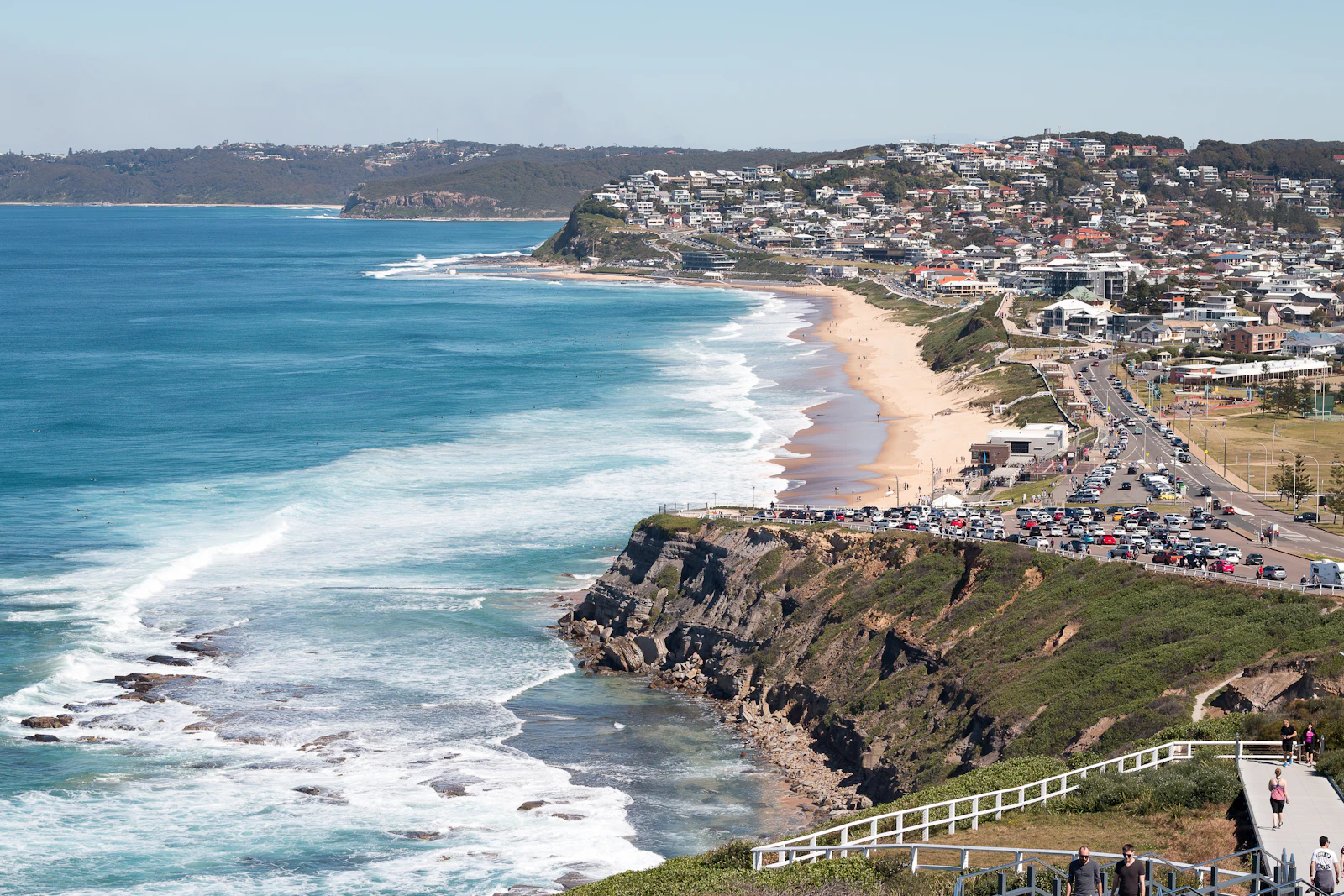
Newcastle is a coastal city on the Pacific with downtown and many central neighbourhoods right on the harbour and beaches; open ocean/coastline is visible from central areas and reachable in minutes.
The sea strongly shapes the city's character and daily routines.
Nearby high country (Barrington Tops and the upper Hunter ranges) contains substantial peaks but typically takes ~1.5–2 hours to reach by road; closer ranges such as the Watagan/Upper Hunter foothills offer more modest 600–800 m terrain within an hour.
Mountains are accessible for weekend trips but are not very close or numerous for frequent short outings.
Newcastle contains substantial urban reserves and woodland pockets (such as a major city reserve within 10–15 minutes) and is within a short drive of larger high-quality forested conservation areas.
While true large contiguous wilderness is generally a little further inland, medium-to-high quality forested areas are commonly reachable within 10–20 minutes.
Newcastle has strong urban green coverage with a continuous coastal foreshore, major green sites (foreshore reserves, King Edward Park, nearby urban reserves) and a network of smaller suburban parks so most neighbourhoods have a 10–15 minute walking access to green space.
Quality and maintenance are generally good, though some inner-urban pockets are denser and rely on smaller parks.
Newcastle is sited at the mouth of the Hunter River with extensive riverfront, multiple city beaches and coastal lagoons; major surf and bathing beaches are typically 5–30 minutes from the CBD.
The combination of an active estuary, multiple beaches and nearby coastal waterways gives many accessible waterbody options for residents.
Newcastle offers excellent coastal running with long, scenic paved routes such as the Bathers Way linking Nobbys Headland to Merewether, plus nearby bush and cliff-top trails in conservation reserves that add varied surfaces.
Routes are generally safe and well-signposted, though some urban sections and headlands create short interruptions.
Within an hour there are coastal escarpments and forested ridge trails offering moderate elevation and several solid day-hike options, but the major alpine areas are 1.5+ hours away (e.g., Barrington/Barrington‑style parks).
The network supports regular weekend activity but is not as extensive or dramatic as true mountain bases.
Coastal caravan parks and several national/state parks (for example a forested national park ~40–60 km and a highland park ~100–150 km) provide several accessible campgrounds within 1–2 hours.
While there are good options for both beach and bush camping, the highest‑profile wilderness areas require drives of an hour or more, so camping is available but not extremely concentrated adjacent to the city.
Multiple high-quality ocean beaches (e.g., Merewether, Nobbys) sit within 0–30 minutes of the city center and are integrated into daily life, with strong surf and beachside amenities.
Water is warm enough for regular swimming across much of the year (roughly six months+ at or above ~18°C), making this a good city for a regular beach routine.
Newcastle is a coastal city with multiple surf beaches (Merewether, Nobbys, Bar Beach) in the city or within a short drive, a strong local surf culture, shops, and schools, and reasonably consistent swell for much of the year.
It offers a variety of breaks and difficulty levels that will satisfy most watersports enthusiasts, though it is not positioned as the single top global surf mecca.
Newcastle is a coastal city with multiple shore and nearshore rocky-reef and wreck dive sites accessible within 0–50 km and regular dive-charter activity.
Conditions are temperate but there is consistent, local scuba availability and some snorkelable beaches, resulting in good availability for residents.
Major alpine resorts (Snowy Mountains) are available but require longer travel from Newcastle (commonly 4–6 hours by road), making them reachable for multi-day trips rather than quick weekends.
Nearby options within 2–3 hours are very limited, so while good mid-range resorts exist in the country, they are not conveniently accessible for frequent short visits.
Newcastle lies within roughly 30–60 minutes of coastal and hinterland crags (including sea-cliff and sandstone areas around Port Stephens, Watagans and nearby reserves), giving access to bouldering, sport and trad climbing within a typical short drive.
The local variety supports frequent outdoor climbing without very long travel.
Daily errands, nighttime outings, and neighborhood strolls proceed without safety worries in coastal and inner-city expat areas, backed by minimal street crime.
Women walk alone confidently after dark, reflecting the city's strong social cohesion.
Expats benefit from a liberating environment where personal security enhances community engagement and well-being over years.
Expats in Newcastle face low property crime in everyday areas, where home break-ins and car thefts are rare enough that standard habits suffice without guards or advanced systems.
Noticeable but infrequent opportunistic thefts demand basic awareness on streets, preserving a calm long-term living experience.
This enables seamless integration into local life with little property-related stress.
In Newcastle, low traffic death rates around 3 per 100K combine with good sidewalks, bike facilities, and calm driving to make streets welcoming for pedestrians and cyclists.
Expats can adopt any transport mode long-term with standard caution, as infrastructure supports safe crossings and speeds stay controlled.
This reliability enhances quality of life by reducing commute stress and enabling active exploration.
Newcastle is in a generally low‑to‑moderate seismicity part of eastern Australia but has experienced damaging earthquakes in the past (for example the 1989 M5.6 event), so felt quakes occur on a multi‑year timescale rather than monthly.
Building codes and retrofits reduce collapse risk, so earthquakes are an occasional but not dominant factor for long‑term residents.
Newcastle sits near forested and rural areas in the Hunter region that see seasonal bushfires and periodic smoke transport into the city; fires near inhabited outskirts are possible though large destructive events are less frequent than in some other Australian regions.
Residents need seasonal awareness and some preparedness during hot, dry months.
Newcastle sits on the Hunter River and the coast, with low-lying river and harbour suburbs that experience riverine and coastal flooding during heavy rain and storm surge, producing localized road closures and property impacts.
Flood-control infrastructure reduces citywide risk, but specific neighbourhoods remain susceptible and require awareness during major rain events.
Newcastle's restaurant landscape is relatively small, dominated by casual dining and Australian fare with selective international options.
While some Asian, Mediterranean, and Indian restaurants serve the community, specialty and niche cuisines are largely absent.
A food explorer would find the variety adequate for common tastes but limited for adventurous global dining.
Newcastle has developed a credible dining scene with quality seafood-focused restaurants and a growing independent restaurant community that emphasizes fresh ingredients and local Australian produce.
The city offers solid casual and mid-range dining with genuine culinary ambition, though it lacks the Michelin recognition, fine dining depth, and internationally acclaimed restaurants of major food cities.
For a long-term resident, Newcastle provides satisfying food across neighborhoods with reliable quality, but falls short of the exceptional breadth and prestige associated with top food destinations.
In Newcastle, modest brunch spots cluster around the beachfront and Hamilton, providing expats with several casual venues for coastal mornings but limited beyond core areas.
This setup encourages a relaxed beach lifestyle yet may involve drives for variety, affecting convenience for frequent use.
Inconsistent peak-hour service highlights the trade-off of small-city charm over abundance.
Newcastle offers solid availability of vegan and vegetarian restaurants with several dedicated venues and vegetarian-friendly options scattered throughout the city center and inner suburbs.
The coastal city has a progressive food culture that supports multiple plant-based restaurants with decent diversity, though density is moderate compared to Sydney or Melbourne.
Expats enjoy a solid delivery network in Newcastle with competing platforms ensuring broad neighborhood access to a range of restaurants beyond just chains, typically arriving in under 45 minutes.
Reliable options for late nights and weekends mean less worry about meals when unwell or working late, supporting an easy adjustment to city life.
The variety fosters a comfortable, low-effort routine over time.
Newcastle (NSW) offers the same Medicare advantages as Canberra—immediate eligibility for eligible residents, free or low-cost GP visits, and good English accessibility throughout public hospitals.[Search results do not contain Newcastle-specific data; inference based on Australian Medicare] As a regional center, Newcastle has adequate but not abundant specialist services; referral wait times are typically 2–4 weeks for routine cases, though elective procedures may take longer.
Expats can rely on public healthcare as their primary option with good practicality, though those seeking rapid specialist access may occasionally use private alternatives.
Newcastle has a solid private healthcare infrastructure with multiple private hospitals and clinics reflecting Australia's private sector maturity, offering faster specialist access and English-speaking care standard for international patients.
Modern diagnostic facilities and international insurance acceptance make routine and intermediate care straightforward to arrange.
Regional constraints mean some rare specializations or cutting-edge procedures require travel to Sydney; private care is highly usable for everyday expat health needs but not comprehensive for all complex scenarios.
Newcastle is a regional economy centered on health, education, construction and resources-support services with comparatively few multinational headquarters or broad English-language professional hiring pipelines.
Skilled openings for internationals exist but are sporadic and competitive, so a successful local placement often takes 4–6 months and commonly requires local experience or sector-specific skills.
Newcastle is a significant regional centre with heavy port, mining services, manufacturing and growing education/health sectors, but metro GDP is below the $50B threshold.
The city has professional services and regional corporate presence but lacks the depth of large multinational HQs and diversified high-end finance/tech sectors required for a higher band.
Newcastle has diversified beyond its historical steel/mining base into port/logistics, education, healthcare, construction, professional services, advanced manufacturing and a growing tech/creative scene — totaling roughly 5–7 distinct industries.
Legacy dependence on resources and heavy industry remains notable, so while meaningful options exist across sectors, the economy is best described as moderately diverse.
Newcastle contains an active regional innovation community with university links and local incubator programs that support early startups, but the pool of local venture capital and track record of large exits is thin.
Founders can build initial products and teams locally, yet must typically seek later funding and scaling support from Sydney or national investors.
Newcastle has minimal multinational employer presence: a small number of mining/service company regional offices and exporters, but very few international firms maintaining local headcounts above 50.
Professionals seeking a broad set of multinational employers typically must look to Sydney or Brisbane.
Newcastle has several dedicated coworking venues concentrated in the CBD and inner suburbs (generally under ten), offering reliable internet and basic facilities such as meeting rooms and hot‑desks.
Variety is limited—few premium private‑office options, 24/7 access is uncommon, and community programming exists at a smaller scale, so long‑term remote workers have workable but constrained choices.
Newcastle hosts a handful of recurring industry meetups and business-chamber activities (tech, mining/services), but the calendar is modest and many events are monthly rather than weekly.
There are active local initiatives and coworking-hosted talks, yet the variety and frequency across multiple industries are limited compared with larger Australian cities.
Newcastle features the University of Newcastle as a key player with programs in medicine, engineering, sciences, and arts, alongside active research and some continuing education accessible in English.
Students contribute to a dynamic urban atmosphere with events and diverse neighborhoods, providing expats a sense of academic community without overwhelming scale.
It serves as a regional hub, offering solid options for intellectual engagement in daily expat routines.
Newcastle provides unrestricted use of global productivity, communication and cloud platforms over normal ISPs without circumvention.
There are no routine government blocks or cloud API throttling that would materially disrupt remote-work and startup operations.
English is the dominant language for all routine interactions—neighbourhood GPs, pharmacies, banks, utility providers and council services operate in English.
An English-only newcomer can handle shopping, medical care, tenancy and government matters with no regular language-related obstacles.
3-5 international schools provide some options with partial accreditation and basic IB or British curricula, but gaps in diversity and tight capacity for mid-year arrivals constrain choices.
Expats can find workable placements yet face trade-offs in school culture or proximity, affecting family routines in this regional hub.
Long-term, limited spread means reliance on fewer high-quality alternatives.
Decent playground coverage exists in central residential zones with safe, basic equipment, reachable within 15-20 minutes walk for many families in average areas.
Quality meets daily needs but sparsity in outer neighborhoods means some parents plan specific outings rather than relying on walkable access.
For expats, this provides adequate child play opportunities without major disruptions to family routines.
Expats in Newcastle benefit from widespread Coles, Woolworths, and local chains ensuring supermarkets are within 10-15 minute walks in urban and suburban areas, with strong emphasis on fresh, organic produce and international sections for global ingredients.
Extended opening hours through evenings and weekends in hygienic, modern environments support flexible weekly shopping.
The competitive pricing and selection create a convenient, high-quality experience that positively impacts long-term living comfort.
Newcastle has a small number of mid-quality shopping centers such as Westfield Newcastle and The Junction, offering basic-to-moderate retail and dining variety.
While these serve routine shopping needs, the limited overall scale and tenant diversity compared to Sydney or Melbourne means expats may find fewer specialist stores and luxury brand options for a major regional city.
Newcastle has developed a growing specialty coffee presence with independent roasters and cafés increasingly visible across the city's neighborhoods.
Third-wave culture is establishing itself with pour-over and single-origin options becoming more common, though the scene remains smaller and less entrenched than in Sydney or Melbourne.
A coffee enthusiast would find good quality in key areas and a supportive local café culture, though comprehensive neighborhood coverage and work-friendly infrastructure are still maturing.
Newcastle provides adequate gyms in coastal and inner suburbs with basic-to-good equipment for most training needs and some yoga or bootcamp classes, though options dwindle in outer areas.
Hours accommodate shift workers, but overcrowding at popular spots and dated gear in independents demand occasional compromises.
Long-term residents can maintain routines effectively but may feel the absence of premium, consistently pristine facilities across the board.
Insufficient specific data on Newcastle's dedicated team sports halls and municipal facility network; scoring reflects typical mid-sized Australian regional city infrastructure with basic community options.
Expats should verify current facility availability and league structures directly with local sports organizations.
Expats find 1–2 reliable wellness facilities in Newcastle with structured services, providing steady options for massages and basic therapies alongside beach living.
This supports occasional rejuvenation for long-term residents balancing active outdoor lifestyles.
While limited, the maintenance quality ensures dependable escapes from coastal humidity.
Newcastle has limited yoga studio density typical of secondary Australian cities, with basic options for regular practice but minimal specialty offerings or premium facilities.
The city's coastal location and fitness culture provide foundational wellness infrastructure, but the studio scene lacks the breadth, instructor credentials, and variety that major metropolitan areas maintain.
Relocating expats should expect straightforward access to general classes but fewer choices for specialized practices or high-end boutique experiences.
No indoor climbing gyms were identified in Newcastle through available sources.
The city lacks documented climbing gym facilities, requiring residents to seek climbing activities outside the city limits or rely on outdoor options.
Newcastle is one of only seven registered padel clubs in Australia with two clubs in the city, but infrastructure remains extremely limited.
The small player base and lack of investment in facilities means inconsistent availability and minimal league or tournament activity.
Expatriates would struggle to find regular playing partners or convenient booking times.
Newcastle has 1-2 solid martial arts options suitable for expats seeking basic training in striking or grappling, sufficient for casual maintenance of skills.
Limited choices mean potential travel for advanced levels, impacting convenience for dedicated practitioners.
For long-term living, it offers introductory fitness without overwhelming options, fitting a relaxed coastal lifestyle.
Social & Community Profile
Community life in Newcastle is quiet but present. Expat communities exist but integration takes effort, and English is widely spoken.
Community & Vibe
Urban atmosphere and local social life
Urban Energyin NewcastleGood
in Newcastle
Newcastle delivers moderate urban energy with a revitalized waterfront (Foreshore precinct), active entertainment strip along King Street with bars and restaurants, and regular cultural events (festivals, outdoor markets). The city has developed a visible creative scene with street art, boutique shops, and emerging nightlife culture. However, energy is concentrated in the inner city and weekends, with quieter residential sprawl; expats seeking consistent urban buzz would find it sufficient but not constant, and the overall pace is more relaxed than comparable Australian or international cities.
Street Atmospherein NewcastleGood
in Newcastle
Newcastle features a balanced street life with beachside promenades, local markets, and moderate outdoor socializing that invigorates daily expat life without chaos. The mix of ordered urban areas and spontaneous coastal gatherings fosters easy long-term integration through friendly interactions and relaxed vibes. This environment enhances quality of life with accessible community energy, ideal for newcomers enjoying active yet manageable public spaces.
Local-First Communityin NewcastleGood
in Newcastle
Newcastle has a relaxed, informal Australian coastal culture that is moderately welcoming to newcomers. Locals are generally friendly but maintain established social circles; successful integration depends on active participation in community activities, sports clubs, and neighborhood engagement.
Multicultural Mixin NewcastleModerate
in Newcastle
Newcastle reflects broader Australian demographics with limited specific diversity data available. As a regional Australian city, it likely maintains lower cultural diversity than major metropolitan centers, with a predominantly Anglo-Celtic population base and smaller minority communities, suggesting a more homogeneous cultural environment.
Expat Life
Expat community, integration, and immigration policy
Expat Integration Experiencein NewcastleVery Good
in Newcastle
Newcastle's welcoming coastal vibe and English dominance allow expats to quickly join local social scenes, forming genuine friendships through casual community events and sports within months. Bureaucracy is foreigner-friendly, and cultural norms encourage openness to newcomers, easing participation in everyday life. This creates an enriching long-term relocation experience where expats rapidly feel like community members.
Expat-First Communityin NewcastleModerate
in Newcastle
Newcastle features a small expat pocket with some online presence and sporadic meetups in coastal areas, but organized infrastructure is limited, meaning new arrivals invest weeks in active outreach to connect. This dynamic extends the period of social adjustment, potentially heightening isolation for those prioritizing quick international bonds in a more local-focused setting. Long-term, it enables niche relationships that enhance a relaxed beach lifestyle without robust event-driven community.
Government Immigration Friendlinessin NewcastleVery Good
in Newcastle
Applicants can use national skilled and employer‑sponsored visas and regional/nominated streams to obtain work rights and then move to permanent residency; application portals and guidance are mature and processing times are typically months. Local nomination options ease the practical path for long‑term settlement, although occasional policy adjustments and technical complexity mean some applicants use advisers.
Language
English support for daily life and administration
Everyday Englishin NewcastleExcellent
in Newcastle
English is the dominant language for all routine interactions—neighbourhood GPs, pharmacies, banks, utility providers and council services operate in English. An English-only newcomer can handle shopping, medical care, tenancy and government matters with no regular language-related obstacles.
Admin English Supportin NewcastleExcellent
in Newcastle