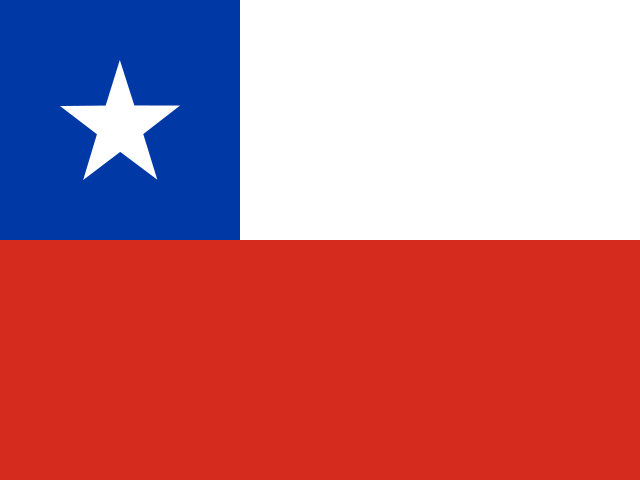
Los Lagos Region
A city in Chile, known for natural beauty and safety.
Photo by David Vilches on Unsplash
Puerto Varas gets 176 sunny days a year — mild conditions year-round. Monthly cost of living for a solo adult is around $1,839 — among the most expensive in Latin America. Puerto Varas scores highest in nature access and safety. On the other hand, culture score below average and learning the local language is important for daily life.
Puerto Varas, Chile runs about $1,839/mo for a balanced lifestyle, logs 176 sunny days a year, and scores 68% on our safety composite across 25K residents.
Find your city match in 5 minutes
Take the quizFeels-like °C
Dinner outside
Cost of Living
monthly · balanced lifestyle · solo living
Feels-like °C
Dinner outside
Cost of Living
monthly · balanced lifestyle · solo living
Mobility
Culture
Nature & Outdoors
Air Quality
Safety
Career
Social & Community
Food & Dining
Family
Healthcare
PM2.5 annual average of 18.2 µg/m³ exceeds the WHO interim target of 15 µg/m³. The WHO guideline value is 5 µg/m³.
Data sources: WHO (air quality), OECD (safety).
Expats in Puerto Varas can handle most daily errands on foot from the town's pleasant core and waterfront neighborhoods, where supermarkets, pharmacies, and cafés are reachable in under 15 minutes amid decent sidewalks and low traffic.
Mixed-use zoning keeps services close to housing in the main residential strips, fostering a relaxed walking lifestyle without car dependency.
Mild weather supports year-round pedestrian comfort, making it practical for long-term newcomers to prioritize walking for routine needs.
Puerto Varas is a small lakeside city with minimal public transit infrastructure—primarily informal minibus services and limited formal routes.
Service is irregular, coverage is sparse, and the city is designed around vehicle use; transit options are insufficient for residents seeking to live without a car.
Puerto Varas offers car-efficient daily life with most errands, commutes, and school drop-offs completable in under 20 minutes, freeing up hours for expats to enjoy lakeside living and community events.
Straightforward roads and plentiful parking create low-friction travel, even around volcanic landscapes.
This setup fosters a relaxed long-term relocation experience, where driving enhances rather than hinders quality time.
Puerto Varas is a compact lakeside city where motorbikes are used for short commutes and errands and tourist/short-term rental options are available; typical intra-city trips are often under 10 km.
Frequent rain and cold-weather spells reduce comfort and year-round appeal somewhat, and foreigner rental/license requirements add modest friction, so a scooter is a viable secondary but not universally dominant choice.
Puerto Varas has minimal cycling infrastructure despite its compact size and tourism appeal.
A few bike paths exist in recreational areas, but the city lacks a connected network of protected lanes for urban transport.
Steep terrain and limited infrastructure integration with public transit make cycling unreliable for commuting, and most cycling activity is leisure-oriented rather than practical daily transport.
A 75-minute drive to Puerto Montt's international airport means substantial planning for regular international travel, which can strain expats balancing family visits or business with daily life in this remote area.
While roads are generally reliable, the length adds fatigue and time away from home, making frequent trips less appealing for long-term relocation.
Residents must adapt schedules around this commitment, trading proximity to nature for slower airport access.
Puerto Varas lacks a commercial airport with scheduled international flights, relying entirely on domestic connections to Santiago for any global access.
Expats considering long-term relocation would find the city effectively disconnected from the aviation network, making family visits, business travel, or holidays abroad highly inconvenient and time-consuming.
This severe limitation turns international mobility into a major barrier, often requiring full-day domestic flights before even starting an international journey.
With no nearby airport offering low-cost flights, Puerto Varas residents depend on Puerto Montt's limited budget options, leading to infrequent and costly regional travel.
This isolation reduces opportunities for affordable spontaneous trips, affecting expats' ability to explore Chile or beyond regularly.
Long-term, it limits travel freedom and increases mobility expenses, impacting overall quality of life in this scenic but remote area.
Puerto Varas is a small coastal town with minimal dedicated art museum infrastructure, featuring only small local galleries and informal art spaces focused on regional and contemporary work.
The absence of established institutions means limited access to significant collections or regular exhibitions for art-focused relocators.
Puerto Varas has very limited history museum infrastructure, with only small local exhibits scattered through the city related to settler and regional heritage.
The small scale and lack of dedicated major institutions mean history enthusiasts will find minimal organized cultural resources for deeper historical exploration.
Puerto Varas features a well-preserved German-colonial townscape and timber architecture along the lakeshore that are of local and regional heritage interest; the town core and waterfront are protected at the national level.
There are no UNESCO World Heritage sites inside the city, so heritage is notable but limited in international recognition.
Puerto Varas has minimal theatre presence with just a few small community groups offering infrequent shows, leaving expats with few local options for performing arts immersion.
This gap can make cultural life feel sparse for long-term relocation, pushing residents toward nature pursuits or trips to bigger hubs, potentially leading to boredom for theatre lovers.
Rare performances offer brief highlights but insufficient depth for ongoing quality-of-life enrichment.
Puerto Varas is a small lakeside town with minimal cinema infrastructure—typically one basic theater with outdated equipment and infrequent showings.
The city offers virtually no access to film festivals, international releases, or art-house programming, making it restrictive for cinema lovers.
Puerto Varas is a small Chilean resort town with a seasonal tourism economy and no significant permanent live music venue infrastructure.
Occasional performances may occur in bars during peak season, but programming is irregular, genre-limited, and insufficient for residents seeking consistent access to live shows.
The city lacks the critical mass of venues and audiences to support a local music scene.
Puerto Varas has very infrequent live music programming, with events concentrated in tourist season and lacking consistent venues or reliable scheduling.
The city's small population and coastal resort character limit the development of a sustained local music scene or touring artist infrastructure.
Puerto Varas features a handful of bars and pubs mainly for tourists, closing early around midnight with minimal late-night venues or club options.
Nightlife is not a core part of local culture, restricting regular social outings to quiet evenings.
For relocating expats who prioritize bars and clubs, this scarcity means limited integration into a going-out routine, better suited to those preferring calm, nature-focused living over urban night scenes.
Puerto Varas is on a large lake but is relatively close to coastal waters of the Reloncaví Sound/nearby towns (roughly 20–40 km, typically a 30–60 minute drive to tidal/coastal shoreline).
The sea is reachable for weekend visits and figures into regional life, but it is not visible from the city center and is not immediately present day‑to‑day.
Puerto Varas looks onto the volcanic Andean chain (Osorno and Calbuco are prominent and visible) with major mountain areas and national-park trailheads typically 30–60 minutes away (Vicente Pérez Rosales / Petrohué ~35–50 min).
The nearby volcanic range provides diverse alpine-style activities (hiking, glacier approaches, seasonal skiing), though the city is not surrounded by a continuous massif in every direction.
Puerto Varas is set on a large lake shore within the temperate rainforest/eastern lake district; forested shoreline and contiguous valdivian-type forests are found at the town edge and on nearby slopes.
Larger, biodiverse forest tracts and protected areas are reachable by very short drives, so forests begin effectively at the city edge.
As a small lakeside city the urban area features frequent lakeshore parks, plazas and tree-lined residential streets so most residents are rarely more than a 5–10 minute walk from usable green space.
The mix of continuous waterfront greenbelt and numerous pocket parks gives broad, well-distributed daily access to outdoor recreation.
Puerto Varas is located on the shore of Lake Llanquihue and provides immediate lake access plus nearby river connections (e.g., the Petrohué/Peulla corridor and Todos los Santos system within a few dozen kilometres).
Multiple large, clean lakes and clear river routes are available for boating and fishing, giving the city many accessible freshwater bodies.
Several kilometres of continuous lakeshore promenade and immediate access to national-park trails toward Osorno and Petrohué give scenic running options, including mixed pavement and trail surfaces.
The urban running network is smaller and more fragmented than in larger cities, and frequent rain/seasonal conditions mean some routes are interrupted or require travel to reach longer trail systems.
Strong hiking is available within roughly 30–60 minutes (Vicente Pérez Rosales area, Petrohué/Todos los Santos basin and approaches to Osorno volcano), offering lakes, volcano ridges and temperate rainforest with many day-hike options and route variety.
Some higher-elevation multi-day treks require longer drives or seasonal access, but a dedicated hiker can regularly find diverse routes close to town.
Puerto Varas is a gateway to lake, volcano and national park camping (Vicente Pérez Rosales, Osorno area) typically 20–80 km away, providing many maintained campgrounds and backcountry options.
The immediate region offers numerous high‑quality sites, though the densest concentration of premium options is in nearby park corridors rather than inside the city.
Puerto Varas sits on Lake Llanquihue with sandy/pebbly lakeshore areas right at the town (minutes from the center), supporting boating and lakeside recreation.
Lake water stays cool and the reliable swim window is short (roughly a few summer months), so while beaches are used regularly in season the cold/short swim season and more riverine/fjord character limit a full beach lifestyle.
Puerto Varas is on Lake Llanquihue and about 20–30 km (roughly 20–40 minutes by road) from the coastal port area around Puerto Montt and the Reloncaví Sound, giving regular access to open‑water kayaking, SUP and seasonal kite/windsurfing; lake conditions are excellent year‑round.
True open‑ocean surf is limited and less consistent in the immediate area, but an active rental/school infrastructure for lake and channel watersports exists, so a watersports enthusiast can maintain their hobby within an hour.
Puerto Varas is located on Lake Llanquihue with freshwater diving opportunities and is approximately a short drive from the coastal gateway city of Puerto Montt, which provides access to cold-water marine sites in nearby sounds and channels.
The mix of lake and nearby fjord/coastal dives gives some accessible options, but conditions are cold and sites are not extensive for snorkeling compared with true coastal dive hubs.
Puerto Varas is within driving distance of regional ski centers on volcanic peaks (for example the Osorno/Pehuenco area and other nearby centers roughly 60–140 km away) but these operations are moderate in scale.
Skiing is accessible for day- and weekend-trips, but the resorts are generally mid-range rather than large international destinations.
Local rock-climbing infrastructure is limited around the city and the region’s best granite walls (notably the well-known valley systems) typically require multi-hour travel including ferry segments and long drives (commonly 3+ hours).
For everyday access the city has only distant or basic crags without short, diverse climbing nearby.
Expats find walking alone at any hour unremarkable in this orderly lakeside town, where mugging or assault risks are negligible across neighborhoods, fostering a sense of ease for daily commutes, errands, and nighttime strolls.
Women experience no routine harassment, allowing full freedom to explore volcanic landscapes or socialize without safety concerns altering plans.
This high street safety supports a serene, active long-term relocation lifestyle centered on nature and community.
Property crime is low in Puerto Varas, with thefts infrequent even in public spaces, allowing expats to navigate residential and commercial areas with minimal vigilance beyond basic habits like locking vehicles.
Home burglaries and vehicle break-ins are rare, supporting a high-trust environment where lost items might be recovered.
This safety contributes to stress-free long-term relocation, emphasizing community living and outdoor activities over property worries.
Chile's road fatality rate is approximately 7-8 per 100K, and Puerto Varas—a smaller regional city—reflects above-average risk relative to developed nations.
Pedestrian crossings exist but drivers frequently fail to yield; tourism and seasonal population swings increase unpredictability.
Newcomers must remain alert on main thoroughfares and at key intersections, though violence-related traffic incidents are uncommon.
Puerto Varas lies in the same Los Lagos megathrust/subduction zone environment as Puerto Montt and is subject to frequent regional M4+ earthquakes and occasional larger events with tsunami potential.
Good seismic design and emergency systems mitigate building collapse, but frequent strong shaking and tsunami awareness make earthquakes a continual part of life, so the score is 2.
Puerto Varas sits in a wet temperate-lake region with high annual rainfall that keeps large wildfires uncommon; occasional dry-season burns in plantation or grassland areas can produce localized smoke but are typically limited and distant from the city.
Standard seasonal caution is generally sufficient for long-term residents.
Puerto Varas lies on the lakeshore of Llanquihue in a high-precipitation lake district where intense rain can overload drainage and cause lakeshore and stream-side street flooding.
Events are typically localized to low-lying lakeshore roads and river mouths and can produce occasional transit disruption during heavy rain.
Puerto Varas provides expats with a small restaurant scene dominated by German heritage and fresh seafood, with only isolated spots for basic international eats like pizza or Chinese, fitting its tranquil lakeside living.
Long-term, this minimal diversity limits culinary excitement, as food enthusiasts cannot easily access or rotate through world cuisines in daily or weekly routines.
The lack of spread across neighborhoods reinforces a homogeneous dining experience amid beautiful surroundings.
Puerto Varas benefits from southern Chile's strong culinary traditions around seafood, fresh produce, and Patagonian ingredients, with a growing number of quality restaurants emphasizing local sourcing.
The dining scene is solid and regional pride in food is evident, offering good options across casual and mid-range venues, though the city's smaller size means fewer acclaimed or innovative establishments compared to Santiago.
Long-term residents can eat well by dining at local favorites, but international dining variety and fine dining options are modest.
Puerto Varas offers very limited brunch availability, with only a small number of cafés and tourist restaurants occasionally serving brunch.
Most dining follows traditional Chilean meal patterns, leaving few reliable options for weekend brunch.
Expats seeking consistent brunch culture will find this a significant gap in the local food scene.
Puerto Varas has almost no dedicated vegan or vegetarian restaurants.
As a small lakeside town, dining options are predominantly conventional and meat-centric, with virtually no specialized plant-based venues.
Long-term vegetarian or vegan residents would face severe dining challenges when eating out and would need to rely almost entirely on home cooking.
Puerto Varas provides basic delivery via limited platforms, mostly chains and casual eateries with inconsistent speeds and coverage limited to central areas, restricting cuisine variety for expat households.
Late-night or weekend orders can be unreliable, making it less ideal for frequent reliance during work stress or illness.
For relocation, this setup offers occasional convenience but expects regular cooking or outings, especially in outlying spots, shaping a more self-sufficient daily routine.
Chile's public healthcare system (Fondo Nacional de Salud—FONASA) is accessible to residents and offers lower copays than private alternatives, with straightforward enrollment once legal residency is established.
GP visits typically occur within 1-2 weeks and costs are minimal (copays roughly $5-15 USD equivalent).
However, specialist wait times extend to 2-4 months, and while some English is spoken in modern facilities, language barriers remain common.
Expats generally use FONASA as their primary system but maintain private insurance for faster access to specialists.
Puerto Varas has a minimal private healthcare ecosystem typical of smaller Chilean cities, with private clinics handling routine and elective procedures but no private hospital for serious conditions.
Specialist access requires travel to larger regional hubs like Puerto Montt or Valdivia; English-speaking capacity is limited outside tourist-oriented practices.
The private sector exists as queue-skipping mechanism rather than a distinct comprehensive alternative for expatriates.
Puerto Varas is a tourism and regional services hub with nearby aquaculture and niche engineering firms; some specialist professional roles exist but hiring is limited and usually requires Spanish or sector-specific experience.
English-language professional vacancies are uncommon, so a qualified foreigner should plan on roughly 4–6 months to find a suitable local position.
Puerto Varas functions primarily as a regional tourism and service hub with local agriculture and hospitality businesses dominating the economy and few large corporate offices or a substantive professional‑services ecosystem.
The city’s economic output is small and concentrated in tourism and related services rather than knowledge‑intensive sectors.
Puerto Varas functions primarily as a tourism and hospitality hub serving the lake district, with secondary activity in local services, construction and some links to nearby aquaculture; professional-grade employment is concentrated in those few sectors.
The narrow private-sector base means a professional seeking a substantially different industry would likely need to move.
Puerto Varas is a small tourism-oriented city with only very limited startup activity, no active local venture firms, and few formal accelerator programs or angel networks.
Entrepreneurship is mainly small business/tourism-focused and there are no notable scale-ups originating from the city.
Puerto Varas is in a region with several multinational aquaculture and seafood companies operating processing plants and regional offices, plus some international hotel/operators serving tourism, giving a modest pool of multinational employers.
These operations provide meaningful local jobs but do not reach the scale or diversity of regional HQ hubs, placing the city in the limited (5–15) band.
Puerto Varas offers a handful of dedicated coworking and small business-centre options (only a few across the town) that provide reliable connectivity and basic facilities suitable for freelancers and remote professionals.
The ecosystem is limited in scale and variety—premium private-office tiers and multiple neighborhood locations are scarce—so long-term residents have options but fewer choices than in regional capitals.
Puerto Varas is a small, tourism-oriented city with occasional festival- or sector-linked events but lacks a regular rhythm of private-sector meetups, active industry chapters, or frequent corporate networking mixers.
For an international professional seeking ongoing, English-accessible professional events, opportunities are minimal and building a career network would be difficult without exceptional personal outreach.
Puerto Varas is a small city of ~40,000 with minimal higher education presence—primarily vocational and technical institutes rather than full research universities.
The absence of a substantial university ecosystem means residents seeking degree programs or intellectual community must travel to larger regional centers like Puerto Montt or Osorno, significantly limiting academic and cultural benefits of staying in the city.
Chile provides broad, unrestricted access to international productivity and developer tools—Slack, Google Workspace, GitHub, Zoom, WhatsApp and the major cloud consoles are available without circumvention tools.
While authorities have on occasion restricted specific content or throttled services briefly during unrest, these instances are infrequent and do not materially impede regular remote-work workflows.
Puerto Varas (population tens of thousands) has noticeable English in hotels, tour operators and some restaurants due to tourism, but regional hospitals, municipal offices and local banks function in Spanish.
An English-only person can manage tourist-facing services in town center but will face language barriers for healthcare, utilities and neighborhood-level interactions.
Puerto Varas is a small city with minimal international school availability, offering only 1-2 institutions with English-medium instruction and limited or no accreditation from major international bodies.
The lack of curriculum diversity and tight capacity means expat families relocating here would struggle to find suitable education options without significant compromise or relocation of children to larger cities.
Puerto Varas has limited playground density; while waterfront parks exist, free public playgrounds suitable for daily use are sparse across residential neighborhoods.
Families often need to plan specific trips rather than benefit from neighborhood-level play areas within 5-10 minute walks.
Equipment quality is inconsistent, and many neighborhoods lack safe, accessible outdoor play infrastructure.
Puerto Varas has adequate supermarket coverage with multiple chains and local markets providing fresh produce and household essentials across the city.
International product availability is moderate, reflecting Chile's stronger food retail infrastructure compared to remote regions.
An expat would experience reliable grocery shopping with acceptable variety, though specialty imported items and organic options are more limited than in Santiago or major Chilean cities.
Puerto Varas has minimal formalized shopping mall infrastructure, relying primarily on small-scale retail and outdoor markets rather than modern commercial centers.
Expats relocating here should expect limited indoor shopping amenities and will need to travel to larger regional cities for substantial retail variety and modern facilities.
Puerto Varas shows no documented specialty coffee infrastructure, local roasters, or independent cafés focused on third-wave coffee culture.
Visitors and residents would encounter only basic café options, making it unsuitable for someone relocating with a serious interest in accessing quality specialty coffee regularly.
Puerto Varas offers few gyms concentrated around the downtown area with basic cardio machines and limited free weights, making it challenging for a fitness enthusiast to maintain diverse strength training without traveling or settling for inconsistent quality.
Group classes are scarce, and evening hours are unreliable, disrupting structured routines.
For long-term expat life, this limited ecosystem requires notable compromises, hindering the seamless integration of serious gym habits into daily living.
Puerto Varas is documented as a nature-focused destination with emphasis on outdoor activities (kayaking, hiking, volcano tours, and water sports) rather than organized team sports facilities.
While some sports complexes and casinos are mentioned in regional overviews, dedicated team sports halls or formal competitive leagues are not evident.
Expats here would rely heavily on outdoor and individual pursuits rather than structured team sports access.
Puerto Varas has very limited wellness infrastructure, with only 1–2 basic spa venues offering simple massage services.
For long-term residents, accessing consistent, professional wellness treatments would require travel to larger Chilean cities, making this a significant gap for those prioritizing regular spa and wellness access.
A couple of dependable yoga studios in Puerto Varas deliver consistent classes, helping expats balance the active lakeside lifestyle with mindfulness practices.
With limited class variety, options suit beginners or casual practitioners but may feel restrictive over time.
This setup supports moderate wellness incorporation for newcomers in a scenic, smaller community.
Puerto Varas has no documented indoor climbing gyms despite being a hub for outdoor adventure tourism with extensive hiking, volcano climbing, and access to Cochamó Valley granite climbing.
The absence of indoor facilities from comprehensive tourism and activity listings indicates climbers would need to travel elsewhere for gym-based training.
Puerto Varas has minimal documented public tennis and pickleball facilities.
As a smaller coastal city, recreational sports infrastructure focuses on water activities rather than court sports.
Residents would need to seek private options or travel to larger nearby cities for consistent court access.
Puerto Varas shows no evidence of padel court facilities or clubs.
This Chilean lake town does not yet offer padel as a recreational or competitive option for long-term residents.
Puerto Varas shows minimal martial arts infrastructure with no dedicated facilities identified.
While the region may have informal options, there is no evidence of established gyms or academies offering martial arts training, limiting access for long-term practitioners.
Social & Community Profile
Community life in Puerto Varas is quiet but present. Expat communities exist but integration takes effort, and learning the local language helps.
Community & Vibe
Urban atmosphere and local social life
Urban Energyin Puerto VarasModerate
in Puerto Varas
Puerto Varas has gentle street life near the lakefront with cafes and artisan markets on weekends, alongside sporadic cultural fairs tied to German heritage. An expat would experience limited evening animation beyond a handful of bars, making the town feel pleasantly active by day but too serene at night for sustained urban thrill. This creates a calm, nature-immersed relocation experience ideal for unwinding rather than high-energy immersion.
Street Atmospherein Puerto VarasGood
in Puerto Varas
Puerto Varas provides expats with a balanced street atmosphere of orderly German-influenced architecture along the lakefront mixed with moderate spontaneity from local markets and outdoor cafés. Streets foster gentle community interactions through waterfront strolls and seasonal festivals, offering a harmonious pace for long-term living without intense chaos. This setup supports a comfortable expat experience blending tranquility with enough social energy for regular engagement.
Local-First Communityin Puerto VarasVery Good
in Puerto Varas
Puerto Varas offers exceptionally welcoming local integration, rooted in its German-Chilean heritage emphasizing community values and European-influenced social warmth. The established expat community, combined with locals' reputation for being patient and helpful, creates a genuinely inclusive environment where newcomers—particularly those engaged in outdoor and cultural activities—integrate smoothly into daily social life.
Multicultural Mixin Puerto VarasModerate
in Puerto Varas
Puerto Varas reflects the broader Chilean southern region's demographics, with a predominantly European-descended population (primarily German and Swiss heritage from 19th-century immigration) but limited current international diversity or visible multicultural communities. The city's character is shaped primarily by its lakeside tourism economy and regional Chilean culture rather than active multicultural integration, offering modest cultural variation for long-term expatriates.
Expat Life
Expat community, integration, and immigration policy
Expat Integration Experiencein Puerto VarasVery Good
in Puerto Varas
Puerto Varas is a small, tourism-oriented Chilean city where locals are accustomed to foreign visitors and generally open to long-term expat settlement. Spanish proficiency is helpful but not a complete barrier due to English being more common among younger residents and service sectors; the tight-knit, outdoor-recreation-centered community (lakes, hiking) creates organic social integration points. Bureaucratic processes are more streamlined than larger Chilean cities, allowing motivated expats to build local connections and feel part of the community within 6-12 months.
Expat-First Communityin Puerto VarasModerate
in Puerto Varas
Puerto Varas hosts a modest expat group drawn to its lakeside beauty, where occasional online forums and casual meetups allow connections after persistent effort over several weeks. This provides a basic entry to international contacts for long-term residents but lacks the frequency to prevent feelings of disconnection in everyday life. The concentrated yet informal nature suits patient newcomers seeking gradual social embedding.
Government Immigration Friendlinessin Puerto VarasVery Good
in Puerto Varas
Chile provides multiple accessible visa types (work, temporary residence and specific remote-worker arrangements) and a generally digital-first application environment with predictable processing times often under two months, plus a clear route from temporary to longer-term residency. In practice local migration procedures are manageable though primarily conducted in Spanish, and regional offices serve routine registration needs without systemic multi-year backlogs.
Language
English support for daily life and administration
Everyday Englishin Puerto VarasModerate
in Puerto Varas
Puerto Varas (population tens of thousands) has noticeable English in hotels, tour operators and some restaurants due to tourism, but regional hospitals, municipal offices and local banks function in Spanish. An English-only person can manage tourist-facing services in town center but will face language barriers for healthcare, utilities and neighborhood-level interactions.
Admin English Supportin Puerto VarasModerate
in Puerto Varas