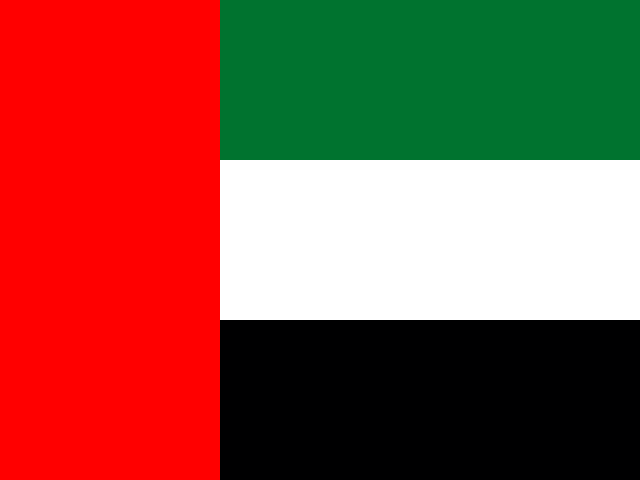
Raʼs al Khaymah
A city in the United Arab Emirates, known for natural beauty and safety.
Photo by Kate Trysh on Unsplash
Ras Al Khaimah City is bathed in sunshine — 347 sunny days a year. Summers are intensely hot — air conditioning is essential. Monthly cost of living for a solo adult is around $1,737. Ras Al Khaimah City scores highest in safety and nature access. English is widely spoken and works well for daily life. On the other hand, air quality is a concern and culture score below average.
Ras Al Khaimah City, United Arab Emirates runs about $1,737/mo for a balanced lifestyle, logs 347 sunny days a year, and scores 80% on our safety composite across 259K residents.
Find your city match in 5 minutes
Take the quizFeels-like °C
Dinner outside
Cost of Living
monthly · balanced lifestyle · solo living
Feels-like °C
Dinner outside
Cost of Living
monthly · balanced lifestyle · solo living
Mobility
Culture
Nature & Outdoors
Air Quality
Safety
Career
Social & Community
Food & Dining
Family
Healthcare
PM2.5 annual average of 32.7 µg/m³ exceeds the WHO interim target of 15 µg/m³. The WHO guideline value is 5 µg/m³.
Data sources: WHO (air quality), OECD (safety).
Small-scale but car-reliant with expat compounds distant from core amenities, requiring vehicles for errands as prolonged 40°C+ desert heat for 5 months makes even short walks exhausting and rare.
Limited sidewalks and traffic-dominated paths in residential areas hinder safe pedestrian access to supermarkets or pharmacies.
Expats experience minimal walkability impact, relying on cars for practical daily life in this low-density setup.
Ras Al Khaimah offers basic buses with very limited routes focused on the city center to malls and the airport, but infrequent service and early closures leave neighborhoods disconnected, unsuitable for car-free expat lifestyles.
Newcomers struggle with coverage gaps for errands or social visits, as most residents drive due to the sparse network lacking rail or integrated features.
This severely limits long-term mobility options beyond occasional central trips.
Ras Al Khaimah City benefits from a smaller urban footprint, allowing most daily destinations (hospitals, schools, shopping) to be reached within 10–20 minutes with relatively smooth traffic flow outside peak periods.
Parking is abundant and affordable, and the city's less congested environment compared to Dubai or Abu Dhabi creates predictable travel times.
However, limited alternative routes and occasional bottlenecks during rush hours slightly reduce overall efficiency.
Two-wheelers exist and are used by segments of the population in Ras Al Khaimah, and rental/used markets are present though far smaller than in larger emirates; winters are mild so riding is feasible much of the year.
However the overall environment is car-oriented, licensing/insurance processes add friction for foreigners, and infrastructure and cultural acceptance are not at the level of a primary everyday mode.
Ras Al Khaimah City has negligible cycling infrastructure.
The city is designed around vehicle transport with limited pedestrian or cycling accommodation; cycling is not a viable transport option for daily use.
Reaching Dubai International Airport, the closest major international hub, takes 70-80 minutes from Ras Al Khaimah City center under typical weekday conditions, making frequent trips somewhat inconvenient for expats.
While the drive is straightforward on highways, the length requires advance scheduling, potentially straining regular travel needs.
Long-term residents may find this adequate but not ideal for a highly mobile lifestyle.
Ras Al Khaimah's extremely limited direct international flights, mainly a handful of short-haul regional routes with infrequent service, force expats to rely heavily on nearby Dubai for global travel, complicating spontaneous family or business trips.
This isolation from diverse non-stop options means most journeys involve layovers, adding time and cost that hinder the ease of maintaining international ties long-term.
Residents face practical challenges in achieving a connected lifestyle, often feeling aviationally sidelined despite proximity to better hubs.
Ras Al Khaimah International Airport has growing low-cost service through regional carriers and connections via nearby Dubai's hub, offering residents moderate access to budget flights for regional Gulf and South Asian destinations.
However, the airport's smaller scale limits the breadth of low-cost routes compared to major regional hubs, making it suitable for regular regional budget travel with occasional need to access larger nearby airports.
Ras Al Khaimah lacks notable art museums or galleries, limiting expats to minimal cultural outlets beyond occasional pop-up events.
This absence reduces opportunities for art-inspired leisure, impacting quality of life for culture seekers who may feel culturally isolated.
Long-term residents might rely on nearby Dubai for deeper engagement, making local amenities insufficient for sustained artistic fulfillment.
Ras Al Khaimah has small local history exhibits, including heritage museums focused on traditional Emirati culture and archaeology, but these are minimal in scale and international visibility.
The city is primarily known as a leisure destination rather than a cultural hub, making it unsuitable for expats prioritizing museum-centered historical exploration.
Ras Al Khaimah hosts a number of notable heritage assets — including forts (Dhayah Fort), archaeological sites tied to the historical port of Julfar, and a small number of preserved historic structures — but these are limited in international recognition and are fewer in number compared with major heritage cities.
The city therefore has some notable heritage sites but not the breadth or density of higher bands.
Ras Al Khaimah has minimal theatre and performing arts infrastructure, with very limited professional venues and sporadic productions.
Expatriates seeking regular access to theatre, dance, or classical music will find few local options and may need to travel to larger UAE cities for substantive cultural programming.
Ras Al Khaimah City has minimal cinema infrastructure, with only 1–2 basic screening venues typically located in shopping malls with limited showtimes and screen variety.
For expatriates seeking regular film entertainment, the city offers restricted options and would require travel to larger neighboring emirates for a broader cinema experience.
Ras Al Khaimah has extremely limited live music venue infrastructure with virtually no dedicated venues for regular performances, making live music a rare occurrence in daily city life.
A music lover would find the city lacks the venue density and programming consistency necessary for any meaningful live music engagement.
Ras Al Khaimah has very limited live music infrastructure with infrequent events concentrated in resort venues and occasional touring acts, lacking the stable, recurring programming needed for an active live music scene.
For relocators, this city offers minimal opportunities to engage regularly with live music culture.
Ras Al Khaimah's nightlife is very limited, centered on a handful of resort bars that close early around midnight, lacking density or neighborhood variety.
Expats cannot rely on it for regular social outings, as options are tourist-focused and inactive most nights.
This scarcity hinders a fulfilling long-term experience for bar and club enthusiasts, prioritizing quiet evenings over vibrant nights.
Ras Al Khaimah city is located on the Persian Gulf coast with shoreline, marinas and coastal neighborhoods immediately adjacent to the urban area; open sea is visible from much of the city.
Coastal access is a regular, easily reached feature of daily life.
Ras Al Khaimah is immediately adjacent to the Hajar Mountains; Jebel Jais (≈1,900–1,934 m) and a cluster of high peaks and rugged terrain are typically a 30–60 minute drive from the city, offering varied hiking, climbing and scenic alpine-like terrain.
The nearby range is substantial and visible from the region, providing excellent weekend mountain access (single-peak proximity caps at 4 rather than 5).
Ras Al Khaimah is adjacent to the Hajar Mountains, with wadi valleys and vegetated slopes such as the Jebel Jais/Wadi areas roughly 30–45 minutes' drive from the city, offering moderate-density woodland and shrubland rather than large contiguous forests.
Access is relatively quick compared with desert cities, but the vegetation is montane/rocky and not extensive lowland forest.
The city has a modest set of municipal parks and landscaped public spaces near the coast and central districts, but the built-up area is relatively small and green assets are limited in number and unevenly spread.
For many residents, a decent park is not within a consistent 10–15 minute walk, so daily access is constrained.
Ras Al Khaimah is a coastal city with multiple beaches, bays and sheltered inlets along its shoreline as well as accessible mangrove and coastal areas nearby, offering frequent direct access to the sea.
The combination of clean local beaches and coastal ecosystems provides many usable water-access opportunities for residents.
Ras Al Khaimah has scenic coastal promenades and nearby mountain trail options (Jebel Jais area) that provide usable runs, but the core city has only a few continuous urban routes and variable pedestrian infrastructure.
Overall there are several usable routes with some interruptions and access constraints.
The Hajar Mountains (including the Jebel Jais ridge rising to ~1,900 m) are inside the emirate and typically reachable within about 30–60 minutes from the city, offering steep ridgelines, canyons and a range of day-hike options.
That proximity plus multiple mountain routes and substantial elevation gain supports frequent, year-round hiking (with summer heat at low elevations as a caveat), making the area strong for a relocating hiker.
Ras Al Khaimah has close access to mountain terrain (including Jebel Jais) and wadis as well as beaches, with high-quality mountain and coastal camping areas within roughly 20–60 km.
The combination of nearby rugged mountains, wadis and shoreline provides many well-suited locations for overnight camping and backcountry stays.
Ras Al Khaimah has a lengthy Gulf coastline with swimmable beaches and resort strips within the city or a short drive (typically under 30 minutes); sea temperatures generally exceed 18 °C for most of the year, supporting a long swim season.
The beaches are well used by residents and offer water sports and resort dining, though the scene is quieter and more resort-focused than the region’s largest beach hubs.
Ras Al Khaimah is on the Arabian Gulf with beaches and marinas right on the coast and kite/windsurf operations available within the city or a short drive.
The sea is predominantly flat and surf is rare, so while kiting, SUP and coastal kayaking are accessible within an hour and supported by local infrastructure, consistent ocean waves for surfing are limited.
Ras Al Khaimah has direct Gulf coastline with a small number of local dive/snorkel sites and operators within tens of kilometres of the city, so recreational access exists.
Overall reef development and visibility are limited compared with tropical reef destinations, making site quality modest.
Ras Al Khaimah has no natural snow or mountain ski areas; the nearest snow facility is an indoor slope in Dubai reachable by about 1.5–2 hours' drive (~120–160 km).
There are no nearby alpine resorts, so available options are limited in quality and primarily indoor/novelty experiences.
Ras Al Khaimah sits at the base of the Hajar Mountains (including Jebel Jais) with well‑defined wadis and cliff faces within roughly 30–60 minutes’ drive, offering a wide range of sport, trad and multi‑pitch routes and diverse rock types.
The short drives to multiple distinct cragging areas and presence of long routes and via‑ferrata make it a strong, varied natural climbing area for residents.
Ras Al Khaimah City maintains strong street safety with very low violent crime and a relaxed, family-oriented atmosphere throughout populated areas.
Expats report comfortable walking day and night in residential neighborhoods and along the waterfront.
The smaller urban scale, consistent enforcement, and stable expat community create an environment where personal safety does not meaningfully restrict daily routines or exploration.
Expats encounter low property crime, with theft uncommon and residential areas secure enough for standard locks without advanced infrastructure.
Occasional opportunistic incidents in busier spots necessitate normal caution, but most live without frequent worries.
This allows comfortable long-term living with high trust in daily routines.
Near-average death rates of 4-6 per 100K allow predictable traffic flow on well-maintained roads, with adequate sidewalks in expat areas enabling safe walking and occasional cycling.
Normal caution suffices for most travel modes, though rural outskirts require more care.
Expats enjoy reliable taxi use and driving confidence, fostering a balanced daily routine without major safety fears.
Ras Al Khaimah sits on the Arabian Plate interior and only rarely feels earthquakes sourced from distant fault systems in the region; M4+ events impacting the city are uncommon.
Seismicity is a low-probability concern and does not meaningfully affect everyday living.
Ras Al Khaimah is a coastal city with arid lowlands and nearby Hajar Mountains (within a few tens of kilometres) that contain the bulk of vegetated wadis; wildfires in those uplands are infrequent.
Urban life is generally unaffected, but occasional small mountain fires occur and warrant standard seasonal awareness.
Ras Al Khaimah has a mix of coastal plain and nearby mountains, where heavy storms can channel runoff into wadis and low‑lying streets, but flood events are relatively infrequent and typically confined to specific neighborhoods or valley channels.
Flooding normally causes short‑term, localized disruptions rather than sustained citywide impact.
Ras Al Khaimah's dining landscape is dominated by local and regional Middle Eastern food with limited international options; most international restaurants are generic chains or casual adaptations rather than authentic specialty cuisines.
The small resident population and modest tourist infrastructure mean restaurant variety and authentic global cuisine access are significantly constrained compared to larger regional hubs.
Ras Al Khaimah provides mixed dining with some fresh Emirati and Indian casual eateries, but the average spot feels basic amid resort influence and limited independents, demanding selectivity for good meals.
Local traditions offer modest depth, though chains fill many gaps.
Long-term expats experience functional but unexciting food life, better for budget-conscious routines than passionate exploration.
Ras Al Khaimah City has very limited brunch availability with minimal dedicated brunch venues outside resort and hotel properties.
As a smaller Gulf emirate with less developed expatriate dining infrastructure compared to major regional hubs, reliable brunch options are scattered and inconsistent, making weekend brunch a challenging commitment for long-term residents.
Ras Al Khaimah has very limited vegan and vegetarian restaurant availability, with few dedicated venues outside luxury hotels and occasional international restaurants.
The smaller scale of the city compared to Dubai or Abu Dhabi means plant-based dining options are sporadic and unreliable.
Long-term residents will face significant challenges dining out on a plant-based diet and may need to rely heavily on self-catering.
Ras Al Khaimah offers solid delivery through dominant platforms with good coverage in main areas and meaningful variety including some independents, typically arriving in 30-45 minutes.
Expats can rely on it for workdays or evenings, though outer neighborhoods may have patchier service, still providing convenience over cooking.
This level supports comfortable long-term living by covering essentials without downtown trips, but expect occasional waits during peaks.
The UAE operates a hybrid system where expats are expected to obtain private health insurance; while public facilities exist, they are not readily accessible to foreign residents without specific employment or residency arrangements.
Newcomers face immediate pressure to secure private coverage, rendering the public system marginal for practical expat use.
Limited private options like RAK Hospital offer basic specialist services and faster routine access than public care, but expats often face inconsistent English support and need to travel to Dubai for complex procedures or advanced tech.
This constrains lifestyle flexibility for serious health issues, requiring planning around external hubs for dependable care.
While affordable, the setup suits minor needs but limits full self-sufficiency for long-term residents.
Ras Al Khaimah has a smaller, more localized employer base focused on manufacturing, tourism and construction with relatively few multinational headquarters; English-language professional listings are limited and many roles are sector-specific.
Skilled internationals seeking private-sector professional careers typically face slower hiring (4–6 months) and fewer pathways outside construction, hospitality or factory management.
Ras Al Khaimah is a small emirate capital with an economy focused on manufacturing, tourism and free-zone activity; it hosts limited international corporate headquarters and a modest professional-services presence.
Metro economic scale is modest by regional standards (well under major UAE hubs), so it aligns with an emerging, diversifying economy rather than a sophisticated global business center.
Ras Al Khaimah's professional employment is concentrated in construction/real estate, manufacturing (ceramics, stone), tourism/hospitality and logistics, with smaller finance and services pockets — effectively 3–4 private-sector clusters.
Those few sectors (construction, manufacturing and tourism) dominate professional opportunities, so career switching without relocation is limited and resilience is modest.
Ras Al Khaimah shows nascent entrepreneurship activity with a few government initiatives and small incubator-type programs, but there is minimal local VC, a thin founder community, and no track record of scale exits.
An entrepreneur here would be a pioneer: seed support exists sporadically, while meaningful investor networks and accelerators are largely absent.
Ras Al Khaimah has a limited multinational footprint centered on manufacturing, free-zone exporters and a modest number of international firms with operational facilities; employment is driven by manufacturing plants and logistics rather than many large regional offices.
There are only a small set of international employers with substantial local headcount, so options with major multinationals are constrained.
Ras Al Khaimah has only a very small number (typically under three) of dedicated coworking/business-centre options, often tied to free‑zone or serviced office providers with limited hours and fewer community programs.
For long‑term remote professionals the infrastructure is minimal and many must rely on corporate serviced offices or travel to larger emirates for consistent options.
Ras Al Khaimah runs occasional industry and free-zone business events and has a local chamber of commerce, but recurring professional meetups and sectoral conferences are limited and irregular.
English is commonly used in business, yet the private-sector networking fabric is thin compared with larger UAE cities, so building a wide professional network requires significant effort.
Ras Al Khaimah has 2-3 institutions, primarily the American University of Ras Al Khaimah (a branch campus) and a local technical college, offering limited program diversity concentrated in business and engineering.
The small student population has minimal impact on city culture, and research activity is negligible.
While English-taught programs exist at the American branch, the overall ecosystem lacks the breadth and depth needed to serve long-term intellectual engagement or professional development.
Most developer and productivity platforms (GitHub, Google Workspace, Slack, cloud consoles) are accessible without VPN, but VoIP and some consumer calling services are blocked or restricted for unlicensed providers, creating regular friction for voice-first remote work.
VPNs are commonly used as workarounds for certain call features, so a newcomer should expect occasional disruption and extra setup for reliable voice communications.
English is widely used in everyday life: private healthcare, banks, supermarkets and most service providers in Ras Al Khaimah routinely operate in English and signage is common in commercial areas.
Smaller municipal procedures and some landlord/tenancy documents can still be Arabic-first, but an English-only resident can generally handle groceries, banking and healthcare with only occasional translation needs.
Ras Al Khaimah has 3–5 international schools with limited curriculum diversity, typically concentrated in British or American systems with minimal IB or alternative offerings.
As a smaller Gulf emirate, the city's education ecosystem is constrained; expat families face tight capacity and potential waitlists, particularly for mid-year arrivals, and geographic options are limited to a few clusters rather than distributed across the city.
Playgrounds are few and poorly distributed in Ras Al Khaimah's average neighborhoods, often outdated with basic equipment that lacks maintenance, safety rails, or parent amenities, making walking-distance play impractical for daily child use.
Families typically drive to rare public spots, limiting spontaneous activity and exposing kids to heat without shade.
Expats with young children may struggle long-term, as this gap reduces opportunities for healthy play habits in the urban fabric.
Ras Al Khaimah City has some modern supermarkets and grocery stores, though coverage is less dense than larger Gulf cities, with main stores concentrated in central and commercial areas rather than uniformly distributed.
International product availability is present but more limited compared to Dubai or Doha, reflecting the smaller expat population and lower retail competition.
A relocating person would find basic grocery needs met reliably, but selection and convenience would feel more constrained than in major regional hubs.
Ras Al Khaimah offers 1-2 reliable mid-quality malls like Al Hamra Mall with basic retail and dining, sufficient for everyday expat needs but lacking extensive variety or luxury options.
This setup supports practical shopping without long drives, though limited international brands may require trips to Dubai for specialized purchases, impacting convenience for long-term settlers.
The stable operations provide a functional base for family routines in a quieter setting.
Ras Al Khaimah City has minimal café infrastructure relative to its size, with virtually no specialty coffee presence, local roasters, or work-friendly coffee shop culture.
The city offers no meaningful options for a relocating coffee enthusiast seeking quality specialty coffee.
Fitness enthusiasts in Ras Al Khaimah face limited gym choices mainly near resorts and town center, with dated equipment and scarce group classes, often forcing compromises like early closures or basic setups in non-tourist zones.
While hotel-affiliated facilities offer some cardio and weights, overall inconsistency across neighborhoods disrupts reliable routines.
Long-term relocation here means tolerating patchy access, potentially frustrating serious trainees seeking variety and convenience.
Ras Al Khaimah offers good sports infrastructure with modern complexes including Emirates Sports & Cultural Club (basketball), Al Adaa Al Aali Sports Centre, and various facilities with football fields, tennis courts, and swimming pools.
Multiple gyms and recreational centers are documented, though the emirate is quieter than major UAE hubs.
For team sports specifically, facilities exist at the community and competitive level, supporting active recreation for residents, though the documented scene is less robust than major metropolitan centers in the region.
Ras Al Khaimah City has limited wellness infrastructure, with 1–2 reliable spa facilities primarily attached to resort hotels offering basic structured services, but with less variety and availability compared to larger regional hubs.
The smaller tourism footprint and expatriate population mean fewer dedicated wellness centers and less developed treatment menus.
Residents seeking regular wellness services will find basic professional options available, though choices are constrained and may require travel to nearby emirates for diverse treatment types.
Ras Al Khaimah City has very few standalone yoga studios, with minimal infrastructure outside of occasional hotel-based classes or private instructors.
The city lacks a developed wellness ecosystem comparable to larger Gulf hubs, offering limited class variety and inconsistent accessibility.
Expats relocating here should expect to arrange private sessions or leverage online resources rather than finding established studio communities.
While Ras Al Khaimah offers exceptional outdoor rock climbing on Jebel Jais with guided sessions at adventure camps, the absence of indoor gyms leaves expats without year-round, weather-independent facilities for consistent training.
Long-term newcomers can enjoy thrilling natural climbs seasonally but may struggle with skill maintenance during hot summers, impacting fitness routines and progression.
This outdoor focus suits adventure seekers but limits daily accessibility for urban-based climbing enthusiasts.
Limited documentation exists for dedicated tennis or pickleball facilities in Ras Al Khaimah City.
Without confirmed court locations or community sports infrastructure, the city appears to offer minimal accessible options for these sports compared to other Gulf centers.
Ras Al Khaimah has minimal padel infrastructure with only one or two basic courts available, likely with limited operating hours and irregular public access.
The city's smaller size and lower expatriate concentration have not yet supported the development of dedicated padel facilities or organized playing communities.
Residents interested in padel will face significant challenges accessing courts reliably and finding playing partners or social engagement through the sport.
As a smaller UAE city, Ras Al Khaimah has limited martial arts infrastructure.
While general fitness facilities exist, dedicated martial arts gyms offering professional coaching in multiple disciplines are sparse.
Expats may need to travel to nearby larger emirates for more comprehensive training options.
Social & Community Profile
Community life in Ras Al Khaimah City is quiet but present. Expat communities exist but integration takes effort, and English is widely spoken.
Community & Vibe
Urban atmosphere and local social life
Urban Energyin Ras Al Khaimah CityLow
in Ras Al Khaimah City
Ras Al Khaimah maintains a small-town calm with minimal sidewalk activity beyond resorts, few evening gatherings, and virtually no nightlife or creative scenes, resulting in streets quiet by early evening. Expats relocating long-term would experience low stimulation, ideal for relaxation but isolating for those needing urban momentum in public spaces.
Street Atmospherein Ras Al Khaimah CityLow
in Ras Al Khaimah City
Ras Al Khaimah's public spaces are very orderly and quiet, with clean, regulated streets where interactions remain minimal, leading to a low-key daily atmosphere for expats. Long-term newcomers experience little spontaneity, as the focus on tourism and structure limits community-oriented street life. This setup appeals to those valuing peace but may leave social seekers feeling disconnected in routine public encounters.
Local-First Communityin Ras Al Khaimah CityVery Good
in Ras Al Khaimah City
RAK's smaller, tight-knit expatriate community (80% of 340,000 residents) fosters rapid friendship formation and strong cultural integration, with locals actively welcoming newcomers at community events, cultural festivals, and neighborhood gatherings in areas like Al Hamra Village[2]. Expatriates report high satisfaction with settling-in and sense of belonging; the city ranks first globally for job satisfaction and excels in ease of settling in according to recent rankings[12]. For long-term relocators, RAK delivers warm, authentic community bonds that form quickly through accessible local activities and neighborhood engagement.
Multicultural Mixin Ras Al Khaimah CityVery Good
in Ras Al Khaimah City
With 80% expatriates from numerous nationalities forming a close-knit global community, Ras Al Khaimah provides high cultural diversity through events like art festivals and community gatherings in areas such as Al Hamra Village. Long-term expats experience an inclusive environment where diverse backgrounds coexist warmly, facilitating quick friendships and a sense of belonging alongside natural attractions. This multicultural fabric supports thriving social networks without a single dominant culture overwhelming daily life.
Expat Life
Expat community, integration, and immigration policy
Expat Integration Experiencein Ras Al Khaimah CityModerate
in Ras Al Khaimah City
Ras Al Khaimah offers slightly better integration prospects than other Gulf cities due to a more relaxed social environment and higher English prevalence in daily transactions, but it still suffers from limited genuine pathways into local Emirati circles, a pronounced expat-local divide reinforced by cultural norms and income hierarchies, and bureaucratic friction in housing, banking, and residency matters. An expat can function comfortably in the expat community but crossing into authentic local social life requires exceptional effort and remains largely elusive.
Expat-First Communityin Ras Al Khaimah CityModerate
in Ras Al Khaimah City
A small expat community concentrates in resort areas with occasional meetups and low-activity online groups, requiring weeks of searching to connect. This setup allows eventual access to fellow internationals but lacks regular events, impacting newcomers' early social adjustment. For long-term relocation, it means a quieter entry with limited organized support, suiting those preferring gradual integration.
Government Immigration Friendlinessin Ras Al Khaimah CityVery Good
in Ras Al Khaimah City
As part of the UAE, Ras Al Khaimah benefits from multiple accessible visa routes including long-term 'Golden' residency (multi-year), remote-work and freelance permits, and investor visas, with many application steps handled online and English-language support widely available. The system provides clear, renewable long-term residency options within a few years and routine bureaucratic interactions are generally efficient and predictable, making it practically friendly for long-term foreign residents.
Language
English support for daily life and administration
Everyday Englishin Ras Al Khaimah CityVery Good
in Ras Al Khaimah City
English is widely used in everyday life: private healthcare, banks, supermarkets and most service providers in Ras Al Khaimah routinely operate in English and signage is common in commercial areas. Smaller municipal procedures and some landlord/tenancy documents can still be Arabic-first, but an English-only resident can generally handle groceries, banking and healthcare with only occasional translation needs.
Admin English Supportin Ras Al Khaimah CityVery Good
in Ras Al Khaimah City